Squirrels in the Walls
by
Jody Frank

It was a harsh winter in the Blue Ridge and beyond. Even with plastic-sealed windows, this century-old house is a challenge to heat in single-digit temperatures, so last month had me propping my feet on a heated footstool and typing with sweater sleeves pulled down over chapped knuckles. Now the first daffodils are poking skyward, and I'm unfurling, too. Goodbye, February—but first, a debrief.
With one eye on the ticker-tape of Terrible News, I read and wrote about a wide range of topics for work last month. Highlights included preserved lemons, the life cycles of stars, the American "prepper" lifestyle, and the movers and shakers of the English Enlightenment. It all started to blur together: Should I lay up preserves for the supernova of reason-based civilization? Then I heard scrabbling in the walls.
A raucous gang of squirrels hangs out on a wide brick ledge outside my bathroom window next to the chimney. Almost every day around 3-4pm, they have a party. In the middle of one of the coldest nights, they somehow managed to take the party inside. Little claws could be heard scratching at pipes and a heating vent while one cat slept on and the other looked only mildly concerned. ("You think this is our problem?")
It was time to call Billy.
It had been about a decade since his last visit to this house. He looked a bit grayer and tireder (yeah, me too), but his business card was the same: NUISANCE WILDLIFE REMOVAL over a giant acorn and a conga line of clip-art animals. Etched in white, the critters look as if they've already ascended to the hereafter, but in fact, Billy deals with nuisances non-lethally whenever possible.
He remembered the last squirrel debacle; I'm guessing he's told that story a few times. Back then, a terrible burnt smell arose intermittently from the basement, setting off the smoke alarm. The cause turned out to be a squirrel that had tumbled down an uncovered vent pipe, horribly, into the gas flame of the water heater. Billy's sleuthing began with a stroke of luck: a feather on the basement floor. It had nothing to do with the squirrel, but it led his eye to the water heater. (Where the feather came from, I'll never know.) Then it was just a matter of careful observation and deduction, a process in which he takes as much rightful pride as Alysa Liu does in nailing her landings.
This time, the squirrels had found a weak spot where house and chimney meet and created a hole for themselves to burrow in out of the cold. Another mystery solved and solution planned: the installation of a one-way "door" so that any creature still in the house can get out but not back in.
While my cat Marcel sniffed at his boots, Billy told a few tales of critter removal and opined on the rashness of some of his competitors. "They get an idea in their heads and run with it. Patch up a hole without investigating, and next thing, you got somethin' chewin' through the drywall. You gotta look closely and put all the pieces together."
Suddenly, there it was: a direct line from Billy back to the Enlightenment. Specifically, I thought of Sir Frances Bacon's system of empirical investigation and inductive reasoning,* which marked the start of the scientific method. All that mindful critter wrangling does Bacon proud. The animal is not the enemy; it's a natural mystery to be understood. The struggle is not with the squirrel but with the conditions in which you and the squirrel meet.
The Age of Reason was also an era of major social reform. In 1792, Mary Wollstonecraft argued for equality in education, persuading her readers that women 1) had rational minds, and 2) needed to develop them. A few years after the French Revolution, she drew a compelling parallel between the vapidity of the idle rich and the frivolity of women kept in ignorance. Across the ocean, her arguments resonated with early Americans, who recognized education (and enlightened parenthood) as a chance to instill republican virtues in the new nation's citizens. So there's a direct line from Wollstonecraft to me, too. I'm writing this now partly because she made such a convincing case that I ought to learn to read something more than cookbooks, household ledgers, and silly romantic novels. Maybe our educational system would've developed in the same way without her viral treatise, but maybe not.
It's easy to confuse civilization with its trappings, like snug houses and heated footstools. But really it's something we do and are, not something we have. We civil onward individually and collectively by applying the methods of the past and inventing new ones to meet current conditions. Or: it's not about defending the wall so much as imagining and building the right kind of door.
Marcel started to tug on one of Billy's shoelaces, and I chided him (the cat, I mean) in embarrassment. But Billy didn't mind. "We got a new puppy, my wife and me," he said, "and he's a chewer, too. He likes to burrow under the covers at night. It's kinda hard to sleep when you're afraid of rollin' over on the little guy."
I'm trying to transcend (or sneak past) politics in these posts, but I can't help but think of a certain now-former government official who would've dragged that puppy out to a gravel pit and shot him. Where her education failed her so grievously, and how she rose to a position of power over life and death regardless, are two of the urgent questions requiring our thought and action here in America. On the flip side, it helps to be reminded that basic sanity and decency are much stronger in most folks than the news and our social feeds suggest. Maybe the squirrels will take over someday, or the cats, but for now we persist.
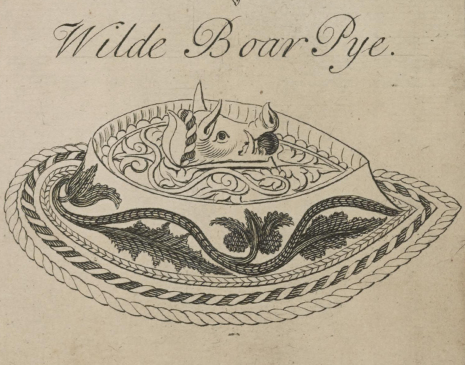
Ain't nothing wrong with cookbooks, by the way. No matter what else we do, we gotta eat. In case you want to take a look back at our culinary heritage on this 250th anniversary of the Republic, the Library of Congress has been crowdsourcing transcriptions of early American recipe ("receipt") books.

Member discussion