Tea Is Our Wine: Tea and Manners among the Tuareg of the Ténéré
by
Inhinan
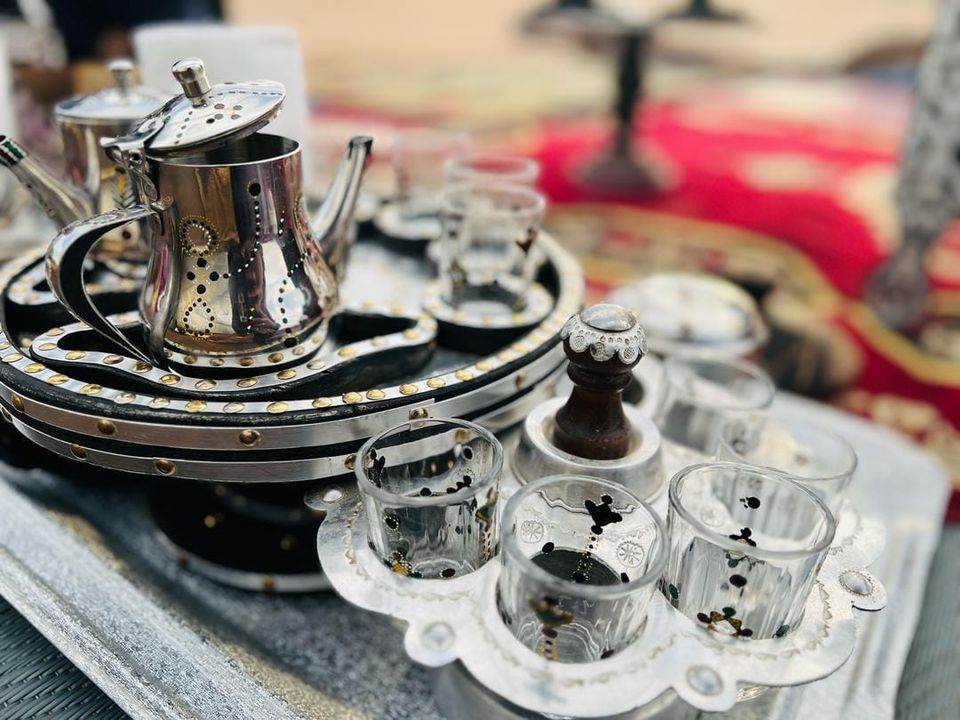
Let me tell you a true story. When I was working as an ICU doctor, I rushed to receive two Tuareg children who had suffered severe burns from an exploding gas cylinder. They had been transferred to the hospital from the south of Libya. It was a hot summer afternoon, and when I went to meet the father and comfort him, he was exhausted and sweaty. He said, "I haven't had tea today."
That sentence stuck in my mind because I didn't expect anyone to want tea in such circumstances. But in another way, I understand it. For Tuareg people, a day without tea is a day without any semblance of normalcy. Tea is our wine. We drink it morning and night.
During my father's childhood, the caravans traveling through the Ténéré desert would stop only to prepare tea, which eased their suffering as they traversed the vast distances on foot, accompanied by their camels. The camels carried goods and provisions, and the nearest trading post was about 500 kilometers to the north, a journey of a month each way, such as the city of Awlif and its surroundings.
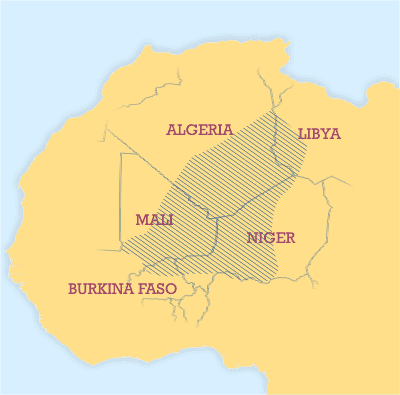
Historically, the tea came from the north of the Sahara Desert and was bought through barter. A man would exchange a goat for four cups of tea and a sugar cube. Because tea was so precious, the same tea leaves were boiled three times.
Today, tea is still linked to all aspects of Taureg life. It is sometimes served as a spiritual drink, sometimes as a symbol of love and appreciation, and sometimes as a reward. As the Tuareg say, "Well done, you deserve the first cup of tea."
We still brew the tea three to four times, yielding four cups with each brewing. This is where the etiquette of each brewing comes in, with important social and political implications.
The first serving of tea is offered to those of high standing in the community, usually the chiefs (Amanokal/Amghar) and religious figures. Here, courtesy is required to determine who is present. The first four cups are distributed among this group. The tea is then re-steeped with fresh water, and the second serving of tea—the second four cups—is offered to the next highest-ranking group. The third serving is then given to those of lower social standing. Thus, a Tuareg man gauges his social status based on the cup of tea he receives.
On one occasion long ago, a group of five guests stopped at a man's tent. The group consisted of four well-known leaders and a senior sheikh named Aghlas Aq Muhammad. The host served the first four cups of tea to the leaders, leaving their companion waiting for the second. The four leaders then offered their cups to the sheikh out of respect for religious figures, given the high social standing they held. The host was surprised to realize the breach of protocol he had made. The sheikh returned the cups to the leaders and recited a poem of condemnation against the host, which is still circulated today, in which he said, “What sin did I commit to deserve this, that you would give me Mutair al-Kasi to drink?”
The order of serving is not the only factor in honoring guests; the size of the cup also carries implicit meanings. Tea is served in three different sizes of cups. The smallest cup is called Anker Dati in Tuareg, meaning "Get out of my sight." In Arabic it is Mutair al-Kasi, meaning "Drink and leave."
From here we move to the medium-sized standard cup, also called an Intsasert, which is used for preparation and serving as well as for measurement during the buying and selling of tea. When serving, the cup should be filled only halfway or slightly above halfway. Filling the cup completely is considered an insult to the guest, as it accuses them of greed and lack of refinement.
The third size, the largest, is used by the Tuareg who have settled in cities. It indicates a person's distance from traditions and lack of familiarity with etiquette. Another tradition we've lost in the city is to be careful not to show your mouth when you drink or eat.
As tea is considered a spiritual and cherished beverage, it is not given to children until they reach puberty. A father or mother may only offer a single sip from their own cup. The tea must be carefully prepared. Here, we refer to the exceptional quality of a woman called Tamsirt, so much so that one would say, "I want a cup of Tamsirt tea," meaning a cup prepared in the best possible way.
The quality of the tea is extremely important, too. Traditionally, the Tuareg distinguished the quality of tea leaves by their size; the thinner ones were considered the best in taste, while the thicker ones were of poor quality and called bourga. From this origin, a man who is not handsome among Tuareg women is called bourga, likened to the worst type of tea.
We still won't drink just any kind of tea, only green tea of the best quality. When I compare us Tuareg to the Arabs here in Libya, I notice their shock when we transport tea from one city to another. Are we smuggling contraband? As we see it, they don't pay as much attention to different qualities of tea, so naturally we have to bring our own. The last time my father's friend sent me a box of high-quality tea from China, airport security opened it and put their hand in it. They demanded to know, "Why tea? Isn't there any tea in Tripoli?"
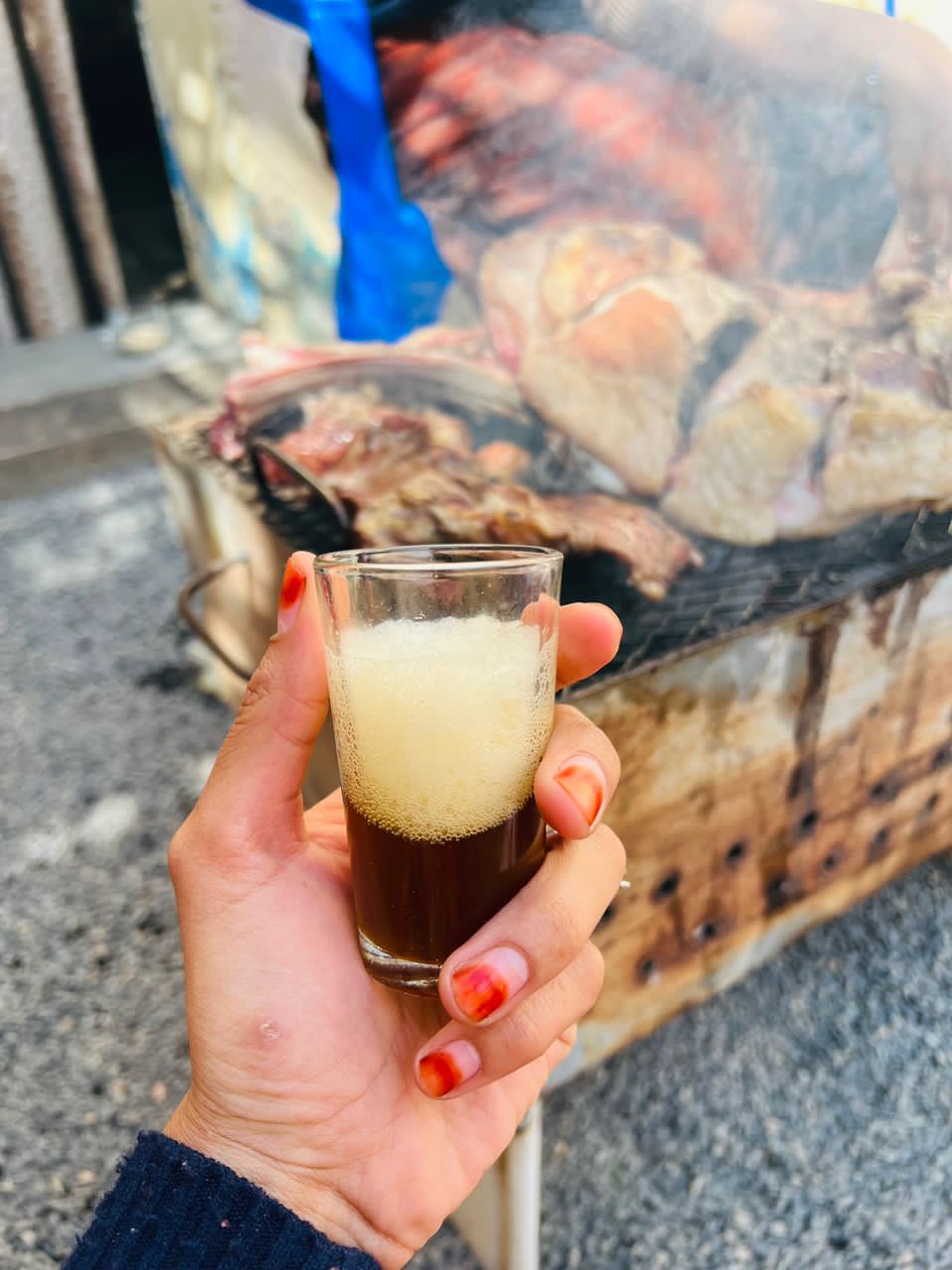
This is how Tuareg traditionally serve the tea: we pour with the spout far above the cup to create foam, which originally was important to capture sand and prevent it from falling into the liquid. For me a good cup of tea always has foam on top.


Member discussion