Curse of the Bee-Wolf
Some thoughts on heroes and monsters after reading Beowulf.

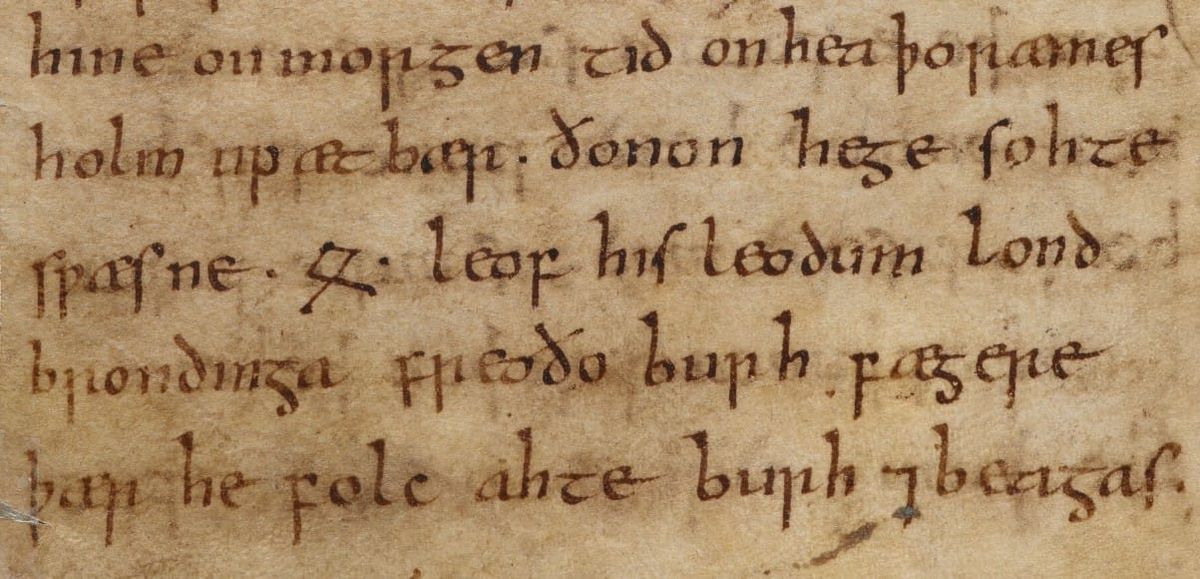
This morning I drove to pick up an order of badly needed hairball control treats (for Marcel and Ani, not me). Waiting for the store to open, I stood in the parking lot and looked up at the sky. Overcast with billowing blue-gray cumulus clouds, it reminded me of the Pacific Northwest, or of the sky through which a dragon might circle and swoop down on a medieval thane. Then I thought: This is the only sky under which anyone has ever lived.
It was a weird week to be editing lessons on Anglo-Saxon epic poems. But it would’ve been a weird week anyway, and those tales of heroes and monsters offered a kind of reflective frame for Scary America 2025.
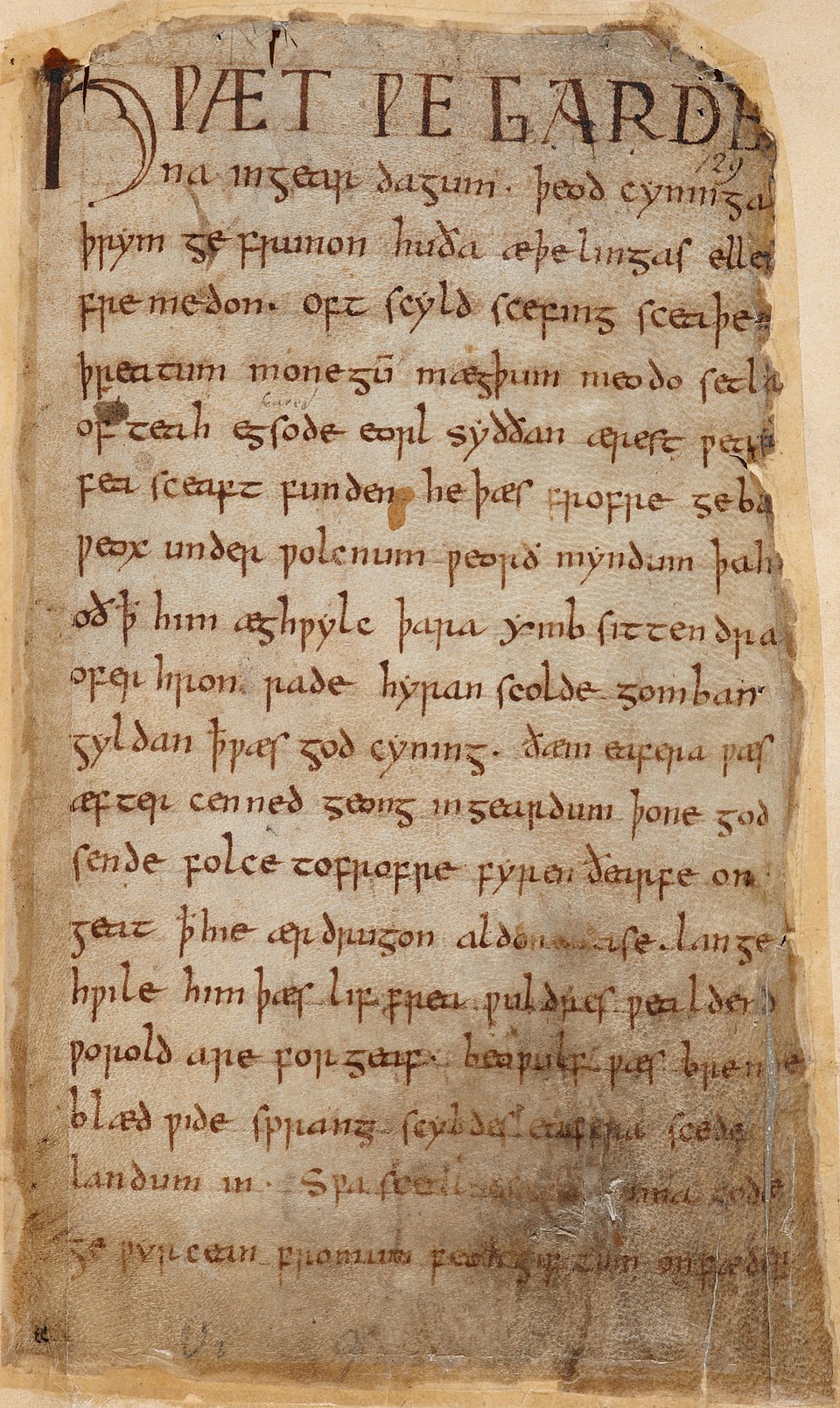
Beowulf is about a heroic Scandinavian warrior whose name translates to Bee-Wolf, or bear. The name is a great example of a kenning, the kind of hyphenated metaphor that Anglo-Saxon poets liked to use. (They were also lavish with alliteration.) Passed from bard to bard long before it was written down, Beowulf references real people and events from the early 6th century, but as far as anyone can tell, its hero is as made-up as Superman.
As a proud young Geat warrior, Beowulf offers to rid Danish King Hrothgar of the monster Grendel, a swamp creature who’s been terrorizing the king’s mead hall. Infuriated by all the happy, drunken carousing, Grendel has been dragging off and eating Hrothgar’s warriors for years. (You’d think the nobles might’ve learned to tone down the revelry, but no.) The Christian monks who first transcribed the poem added a biblical overlay to the pagan Anglo-Saxons’ lines: according to the 11th-century manuscript, Grendel belongs to a race of cursed monsters descended from Cain.
Beowulf swiftly dispatches Grendel and then defeats the monster’s enraged mother. After soaking up praise, he sails home with loot from a grateful Hrothgar, along with a bit of advice from the old king: stay humble, young hero, and remember that no matter how rich and powerful you get, you’re going to die someday. Beowulf becomes king of Geatland, and fifty years after that paternal advice, his pride kills him when he insists on fighting a fierce dragon alone. Mourning their king, his people fear that neighboring tribes will now invade them.
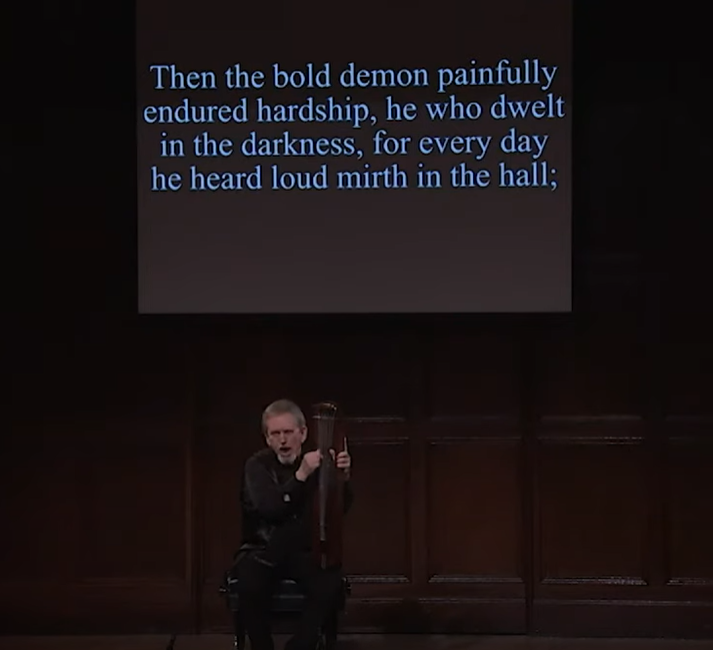
This morning, listening to a mesmerizing performance of the Old English by Benjamin Bagby, I could almost imagine sitting rapt by a fire as the bard wove a spell.
This poem is part of our literary heritage, and I honor it as such. I also get that Beowulf was the kind of hero the Anglo-Saxons needed at the time: a noble brute who could rip the arm off a monster would be able to fend off Viking invaders, too. Moreover, the poem’s mythical monsters probably made the Anglo-Saxons’ real enemies seem a little less terrifying.
But it’s 2025, and I’m an American who loathes looting lords and brutish, blustering bullies. I would like to suggest (as countless wise observers have before me) that the “warfighter” is not the kind of hero we need to heal our internal struggles—not the kind we’ve needed for a long time. In fact, meeting 21st-century problems with 6th-century solutions only makes them worse, especially under the thrall of a mad and malevolent king.
In a time when the lines between heroes and monsters, fact and fiction blur, my thoughts turn to the city of Portland, maybe under a watercolor sky like the one outside my window. It’s been more than a decade since I visited friends there, but I still remember that sky, those mountains, and a downtown rich in coffee shops and cultural treasures. I also remember glimpses of an urban culture rife with irony. I’d caught a bad cold on the plane, the kind that makes tears stream from your eyes nonstop. I was walking down the sidewalk with my friends, eyes streaming, when a young woman who was walking toward us looked at me and said, “Oh, did I hurt you?”
I wonder if she’s dressed as a frog or a unicorn now. Or is she joining the Emergency Naked Bike Ride?
I’m sure this small, nonviolent hipster dispensed some Portland-style sarcasm before an ICE agent sprayed her up close in the face with pepper spray. The king tells him he’s Beowulf and the protesters are monsters, but they just keep cavorting lightly around him, refusing to attack anything but his certainty. Even worse, they are there, defenseless, to defend the vulnerable. The fog of tear gas brings a moment of clarity.