Hearts Full of Soul in Salem
As opposed to hearts of ICE.
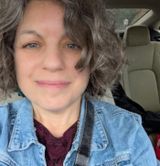
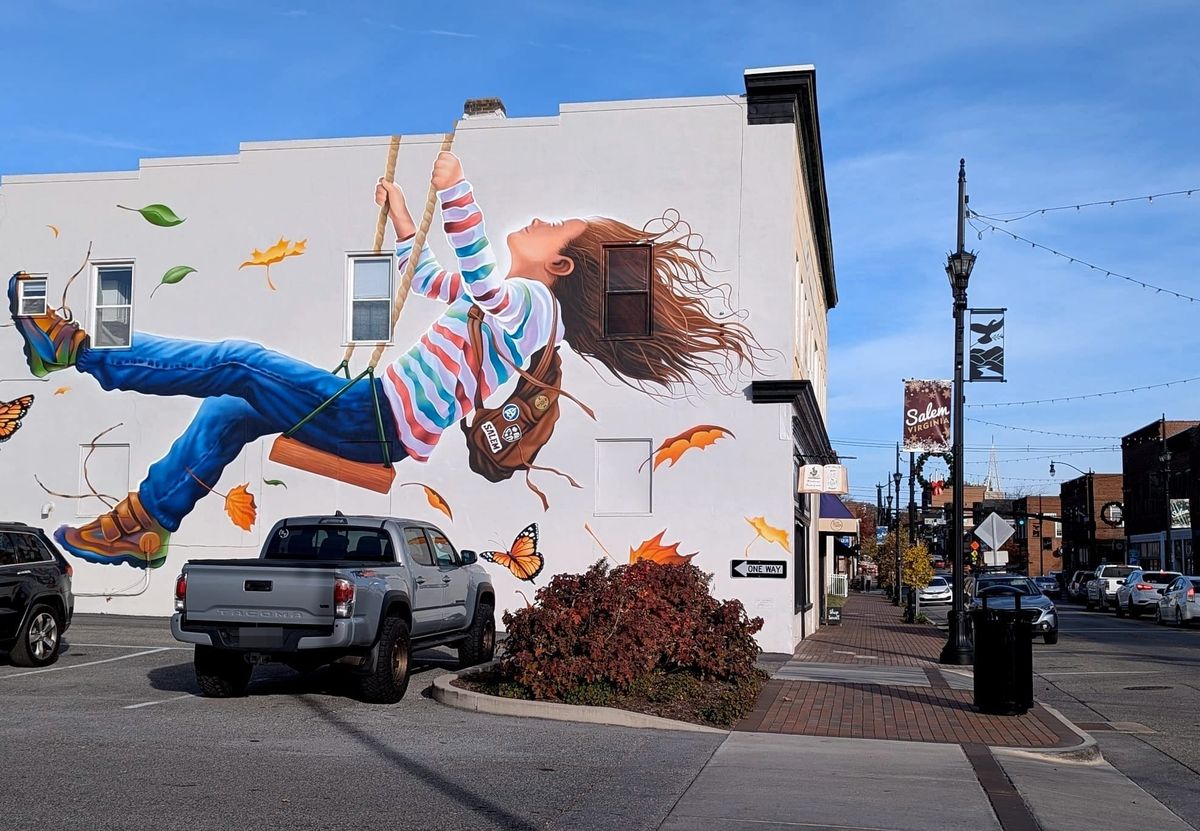
The narrative Salem City has to tell is that of every American city touched by wars, economic upheavals, and civic challenges–as well as by a few healing, helping hands along the way. —Salem Museum Historical Society
I see people hiding
Speech gets harder
There's no sense in writing
--Talk Talk, "Living in Another World"
It's a 20-minute drive to Salem, whose name means "peace"—a small Virginia city that the times keep finding. First settled in the 1700s, Salem thrived as a stop on the Great Road west and then grew into a town after the American Revolution. Like the rest of Virginia, it stood on the side of the Confederacy during the Civil War; the town survived two Union attacks. In the years after, Salem rebuilt its infrastructure and established public schools for all children. In the 1900s its residents mourned the local dead of two World Wars, the whole town praying silently together in the dark when wartime fuel shortages closed the churches. At midnight on December 31, 1967, Salem became, just barely, a city.
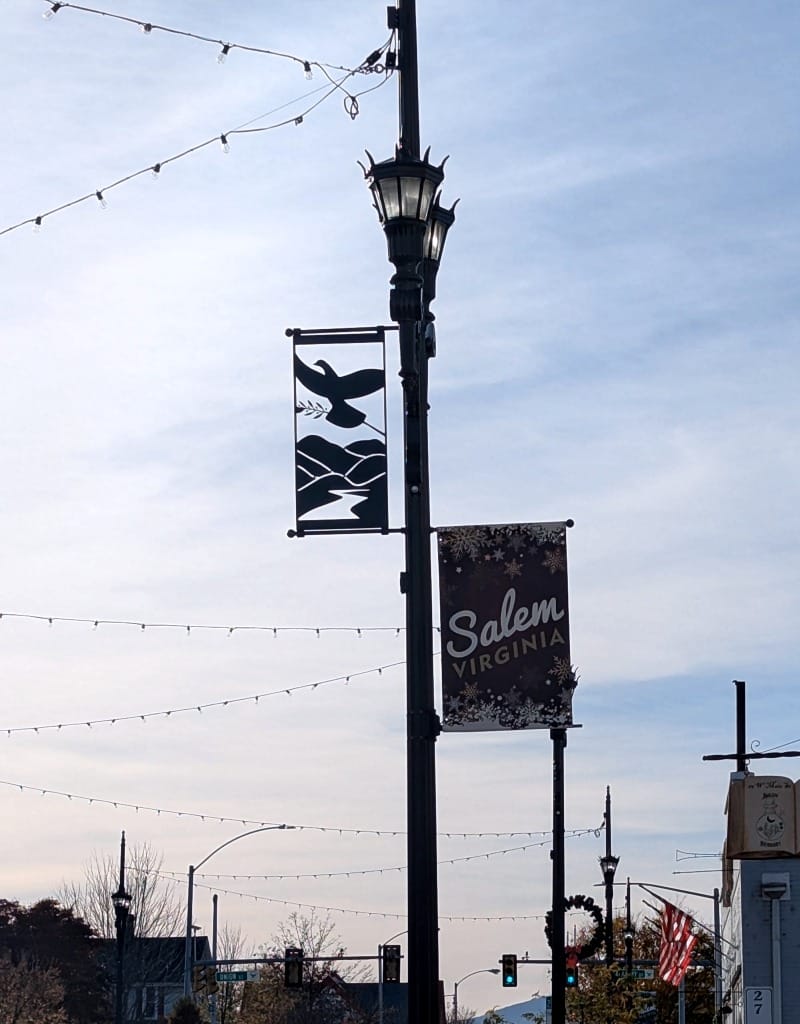
Whatever its official stature, downtown Salem feels like a lovingly cultivated time capsule of small-town quaintness. Welcome signs abound, a symbolic dove sails over mountains with an olive branch, and look, Christmas lights are up!
However, a couple of blocks past the farmer's market, adjacent to a church parking lot, squats an institutional-gray eyesore with dusty, smeared windows. DHS has leased the building for years, at least since 2018. Existing outside and above local authority, this ICE base demonstrably doesn't care to spruce up or blend in.
Until last week, ICE's operations in the region were low profile, targeting specific individuals who had committed real crimes. But the current administration, in their zeal to enact mass deportations and feed the lucrative detention machine, keeps widening the net. An expired or pending immigration status–at most a civil violation–is now treated like a crime even when the person has done everything they can to fix it. Due to the snail's pace of the process, almost anyone who arrives legally and requests asylum will end up in bureaucratic limbo: whatever papers they have will expire before their case reaches the top of the pile. In the normal course of things, they receive work permits, make a life, and wait (sometimes decades) for resolution. But for the first time ever at this scale in modern America, "I'm still waiting for an answer" is being met with the same brutal arrest and detention mechanism as violent crimes. Even legal residents married to U.S. citizens are no longer safe if at any time they "overstayed their visa" while the bureaucracy inched forward. Likewise for any immigrant military personnel or combat veteran who has ever had a drug charge, regardless of why or how long ago they struggled with addiction. ICE's own data belies the claim that they only target "the worst of the worst"– and even that they only detain noncitizens. When your bonus rides on meeting a daily quota and the government grants you impunity, why bother to check papers at all?
The times have found Salem again, and from that ugly little building, they are dragging our neighbors away. ICE agents have been grabbing immigrants off the street in Salem, Roanoke, and surrounding areas on their way to work or to pick up their kids at school. Left behind are cars still running on the side of the road, families with no source of income, and longtime residents who now are afraid to leave their homes. To add to the terror, ICE makes it as difficult as possible for families and lawyers to locate and track the people they've taken. It's 2026, and people are being disappeared from the road I drive up to get to the mall.
Last week a local volunteer organization called Los Ayudantes ("The Helpers") SWVA sounded the alarm about the ICE raids and put out an urgent call for donations of food and other essentials for the affected families. Yesterday the main donation station was the parking lot next to the ICE building, also the site of a small protest. So I picked up some bulk groceries and made the short drive.
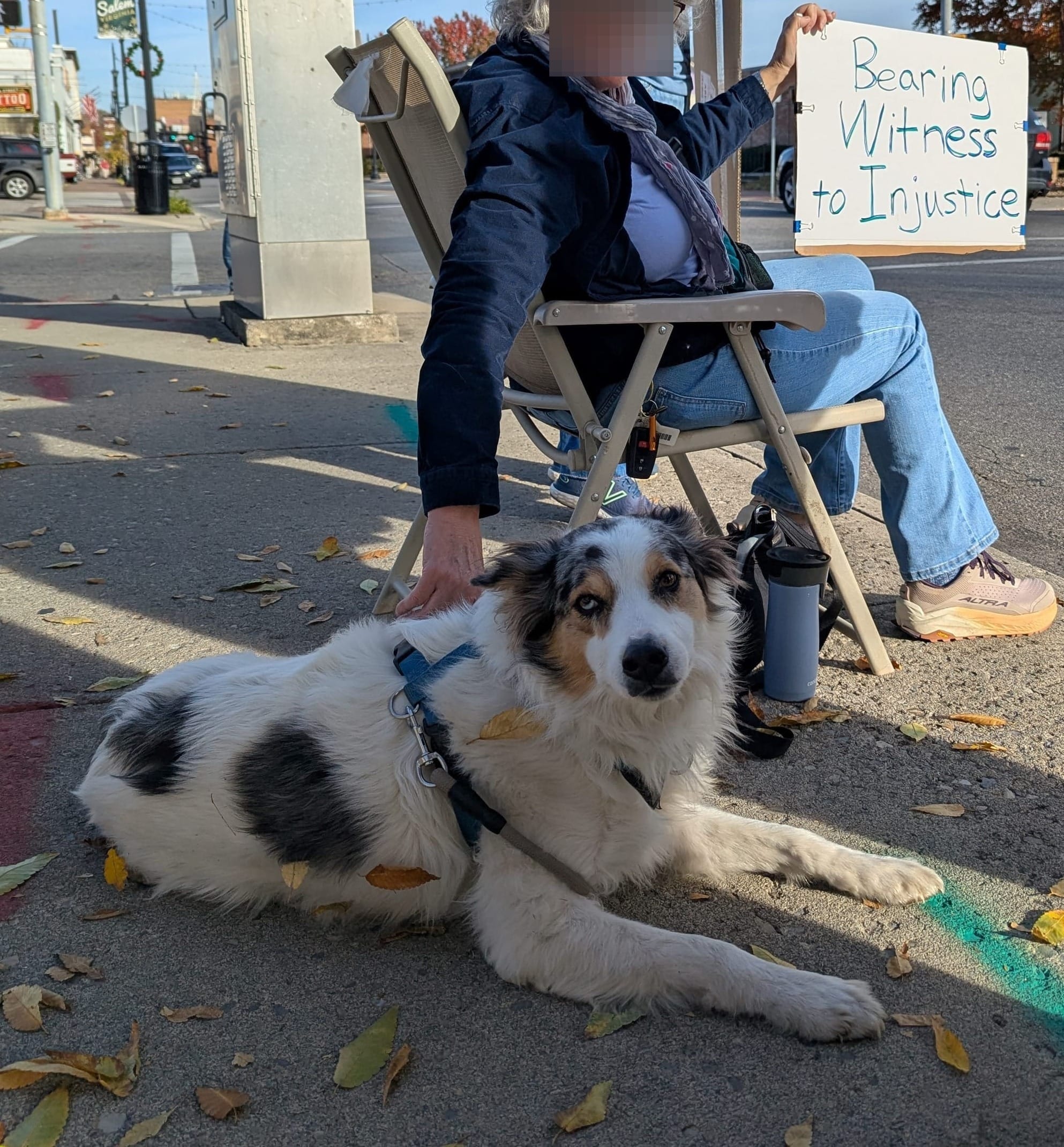
My trunk full of pasta, tomatoes, toilet paper, and pet food was a drop in the bucket—but incredibly, that bucket has filled and emptied three times in the last 48 hours. Other organizations and churches around the region have amplified the call and are taking up collections. The need is overwhelming, but hundreds of helping, healing hands are meeting this emergency, coordinating food pickup, storage, and distribution as well as legal aid. Without them, these families would be alone in the dark.
Yes, there are also people, presumably some locals, who've responded to the social media posts with "lol go ICE, deport them all" and "go home and come back the RIGHT way." No doubt these folks are certain of their accurate understanding of events and assured of their own unimpeachable goodness. But I wonder how they'll feel when the repercussions find them: when all the immigrants who pick their food, care for their elders, and operate on their hearts disappear; when the angry nativists finally get their heart's wish and the rest of the world would rather be anywhere but here.
On the drive home from Salem, trying to lift my mood, I tapped an automated playlist labeled "Happy." The algorithm had my generational number, but it seemed to have some trouble getting into the spirit. Along with that gem of joy from Talk Talk, it served up Simple Minds' "Hunter and the Hunted" and the Yardbirds' "Heart Full of Soul":
Sick at heart and lonely, deep in dark despair
Thinking one thought only, "Where is she, tell me where?"
Here is Los Ayudantes' Amazon gift list if you'd like to help.
They need lots of diapers.