Pain and Healing in a Great American City
Or, why we are not Gregor Samsa.

Pain may arrive suddenly or slowly, strike like lightning or smolder and then flare. You make one false move or a thousand over time—or do nothing at all—and suddenly, you’re in another world. You used to be the director of your deft limbs; now you’re Kafka’s Gregor Samsa, a bug on its back with tiny legs flailing.
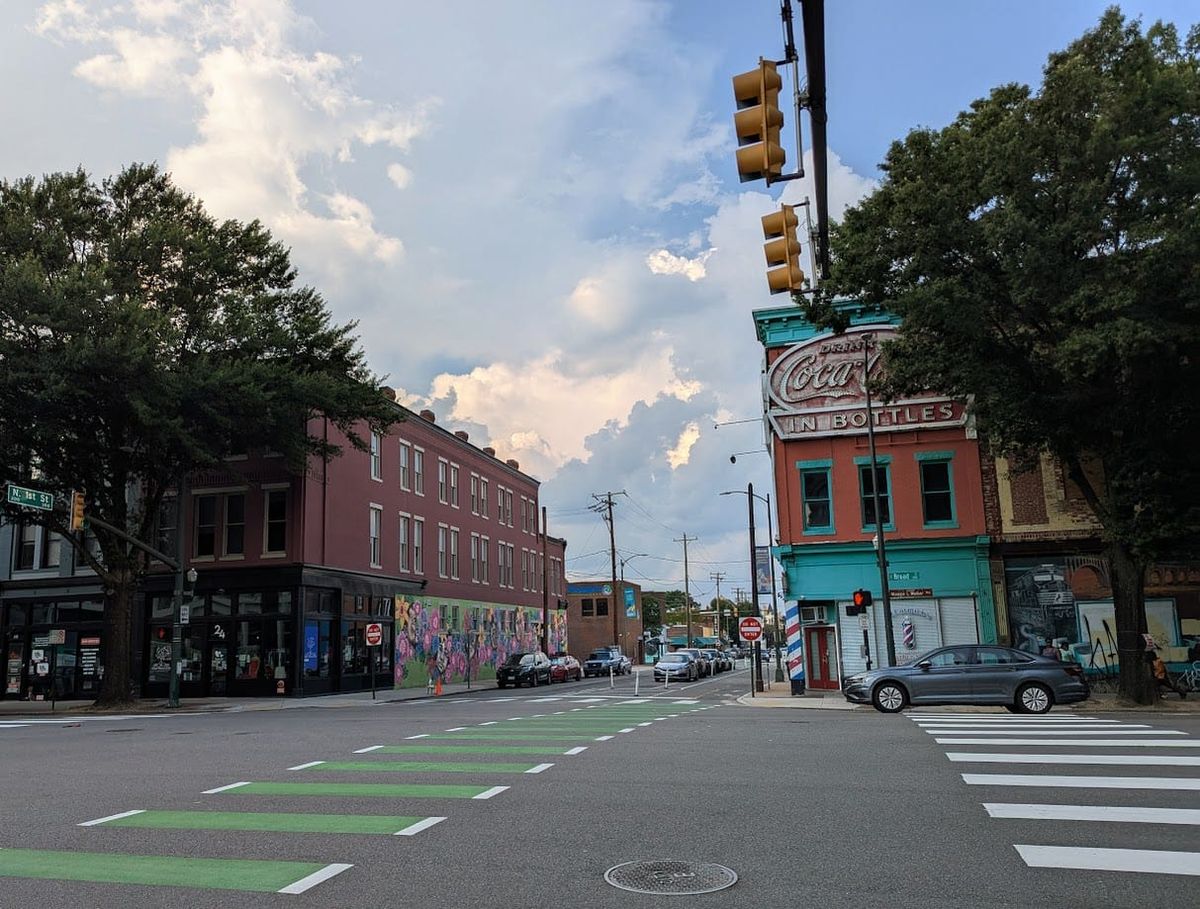
A couple of weeks ago, I accompanied a friend on a three-day road trip to Richmond for her scheduled medical procedure. (Her health journey is her own private story; I’m just sharing context.) My right arm had been aching for a while, but it was no big deal. I had no trouble holding a steering wheel, so off we went.
In the middle of our stay, the pain flared up in the form of calcific tendinitis in my right rotator cuff. Allow me to mix metaphors and say this feels like shards of bone trying to grind your tendons to gruel every time you twitch. Gruel flambé.
But what a strange opportunity pain can turn out to be. On the worst night, I learned that unlike poor Gregor, a helpless victim of fate, we have some power over our pain—at least, more than the topography of our wounds has taught us to believe.
Now with the pain past and fading like a dream, I can type and click again to draw some connections. The history of Richmond figures in.
No Room at the Inn
On M.’s trips for treatment, the hospital reserves her a room at The Doorways, a free hotel for out-of-town patients. The rooms are clean and comfortable, and volunteers cook and serve dinner each night. When we arrived, though, we discovered the hotel had no booking for her and no rooms available. The hospital’s coordinator apparently had reserved her room with too early a start date. When M. hadn’t checked in, per policy, they gave the room to another patient. The matronly, formidable woman behind the desk frowned at her computer.
“We try not to turn anyone away, but the hospital liaison has to follow correct procedure. One of the requirements”—she brandished the fine print and peered up at us significantly—”is being able to read.”
Plan B: while M. tried to reach the hospital coordinator, I whipped out my phone to book us a room in a nearby hotel. That’s how we ended up at the historic Linden Row Inn with a cat named Annabelle, right next to the site of the garden where Edgar Allan Poe courted his first love.
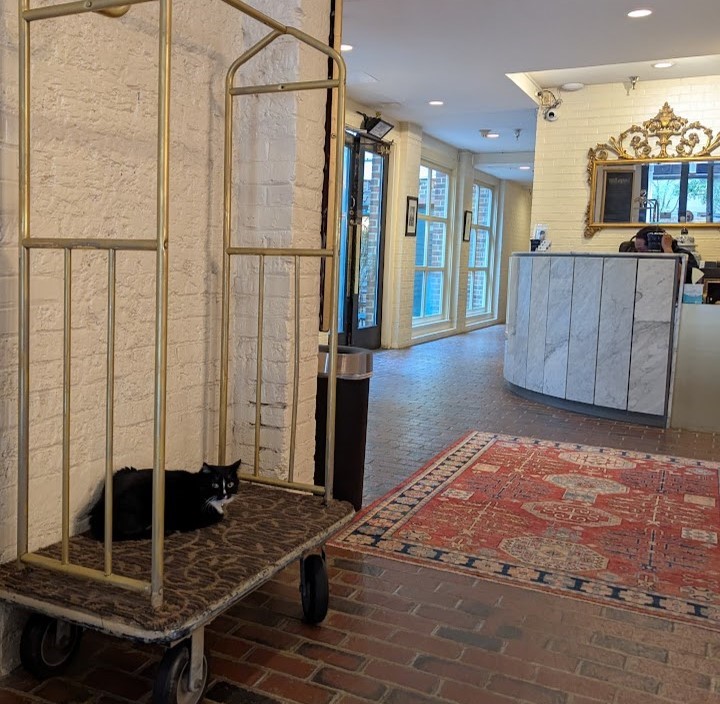
Annabelle, Linden Row’s friendly cat, watches guests arrive and leave.
At Linden Row, a tall, handsome young man with dreadlocks welcomed us with a friendly smile. Upon request, he suggested some places to pick up dinner nearby. We settled on Mama J.’s for southern comfort food. We were the only white people in the small, packed family restaurant as we waited for our takeout, but nobody paid us any mind.
Returning to the hotel, we waved our aromatic bag of catfish, collard greens, and sweet yams, and I blurted to the desk clerk, “We’re excited!”
He laughed, “I’m excited for you!”
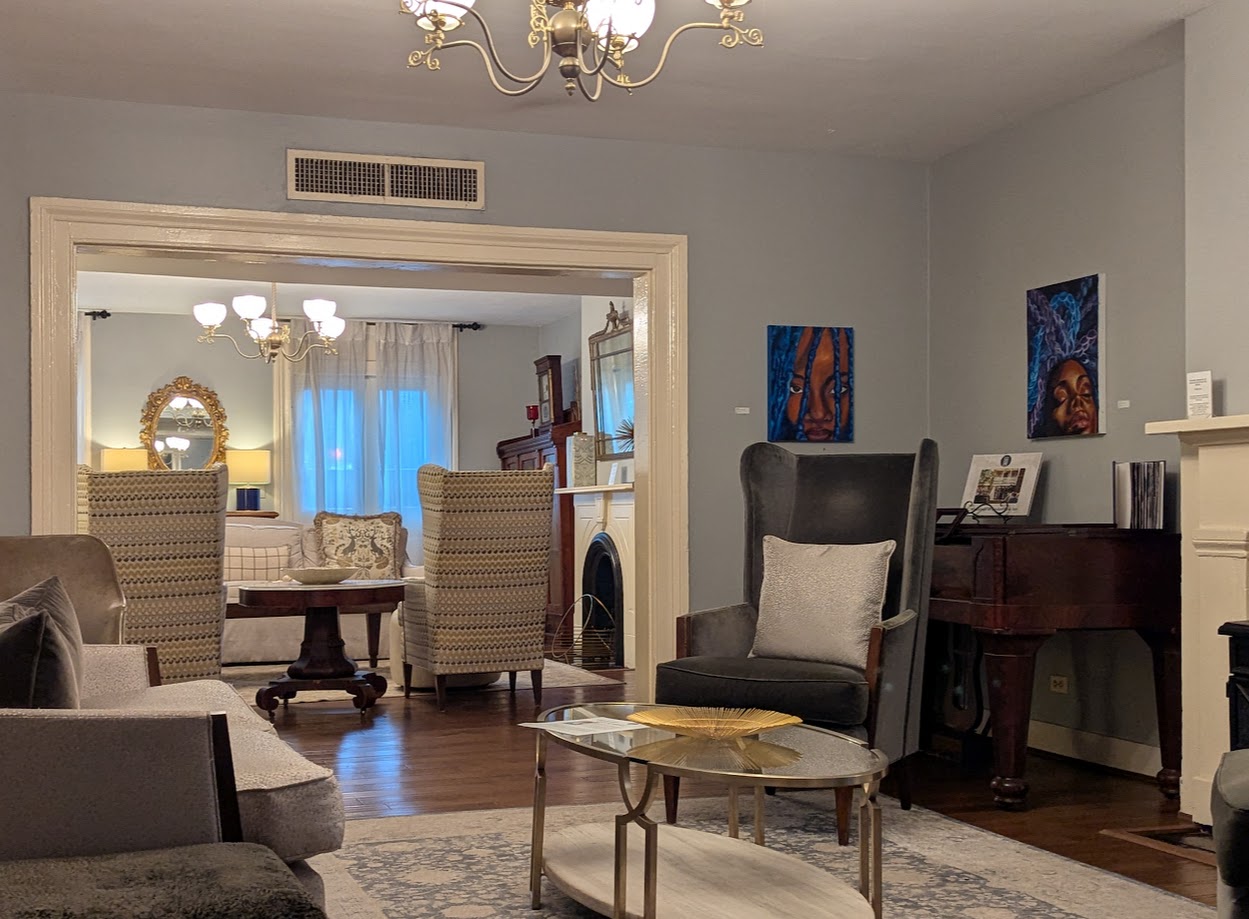
To the right of the lobby was a parlor with the perfect decor for a Great American Inn in the state of Virginia: a traditional southern vibe enriched by paintings of a beautiful black woman radiating power and joy.
Richmond, a Phoenix City
While M. was at the hospital, I worked from my laptop but made time to walk to the Poe Museum in the soupy July heat. I want to write in depth about Poe another time, but for now, here’s his childhood bed with a toy cat on it.
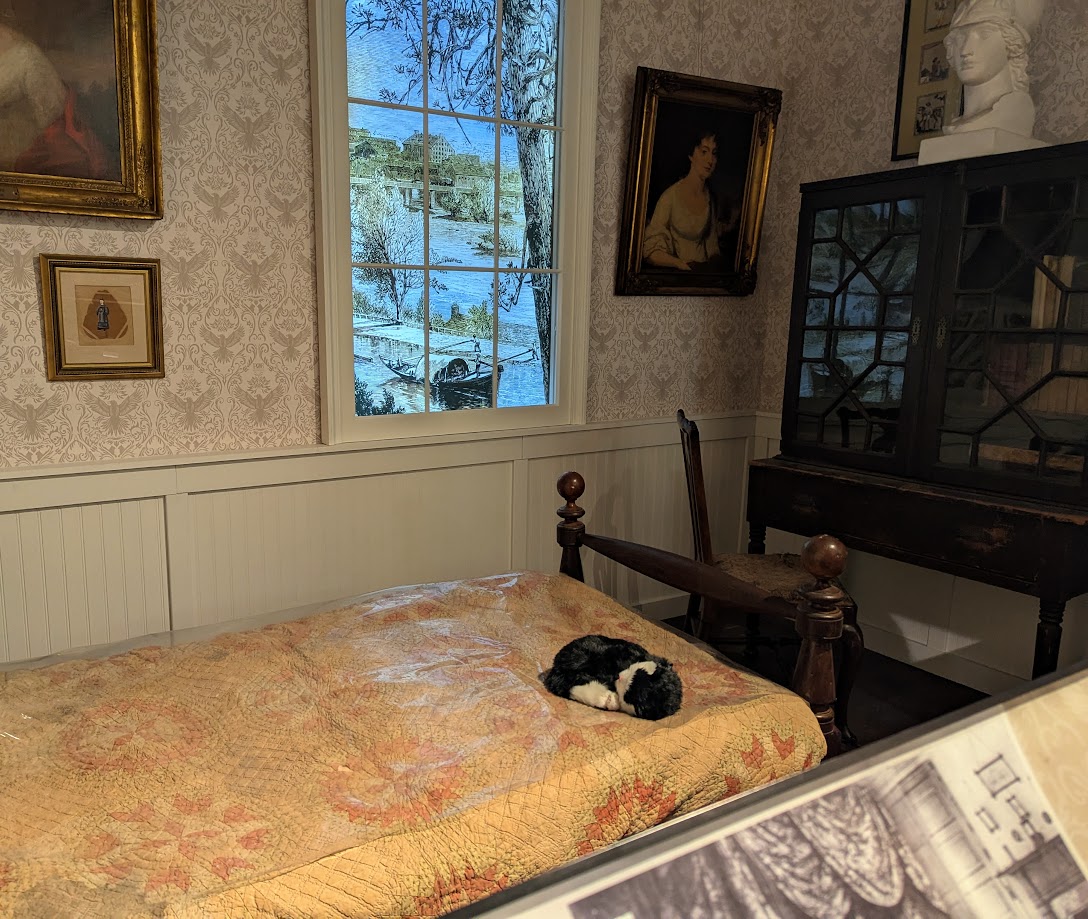
Walking there and back, I soaked up the sights and sounds of a vibrant inner city. Richmond, I learned, has risen twice from its own ashes. The first time was after Revolutionary War traitor Benedict Arnold raided and burned the city in 1781. The second is more shocking.
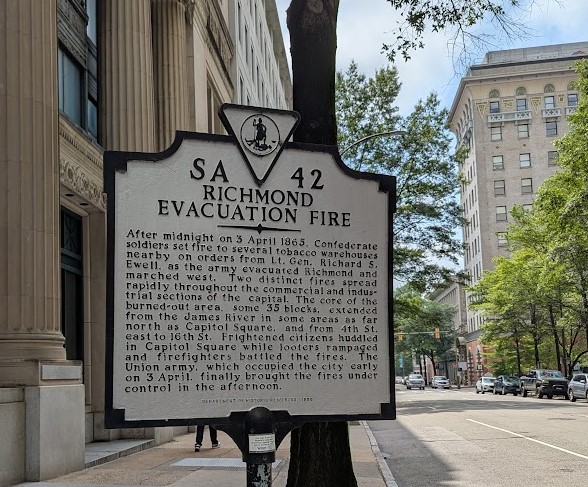
During the Civil War, Richmond was the capital of the Southern Confederacy and the site of Jefferson Davis’s White House. Incredibly, the Confederate army burned the city on their way out at the beginning of April 1865. They set fire to four tobacco warehouses to prevent the goods from falling into Union hands, knowing the fire would spread. This account from the Richmond Whig reveals bitter division between Davis’s army and Richmond’s residents. Though wealthy enslavers may have cheered the Confederate cause to the last, ordinary people were living under a military occupation that showed no care for their lives or homes.
Knowing that the burning of these immense buildings, situated as they were, involved the destruction of at least the business portion of the city, the Mayor forthwith dispatched a committee of gentlemen to remonstrate with the Confederate authorities against the execution of such wanton vandalism….[Major] Melton would hear nothing on the subject, and characterized the statement that burning the warehouses would destroy the city as “a cowardly pretext on the part of the citizens, trumped up to endeavor to save their property for the Yankees.” There was nothing left for the citizens to do but to submit. Resistance was thought of, but the Confederate authorities had guarded against such an event by holding in the city, to execute their barbarous work, two large battalions of Southern troops, every man of whom hated Virginia and Virginians, and longed for nothing more than to see the last house in the city a ruin.
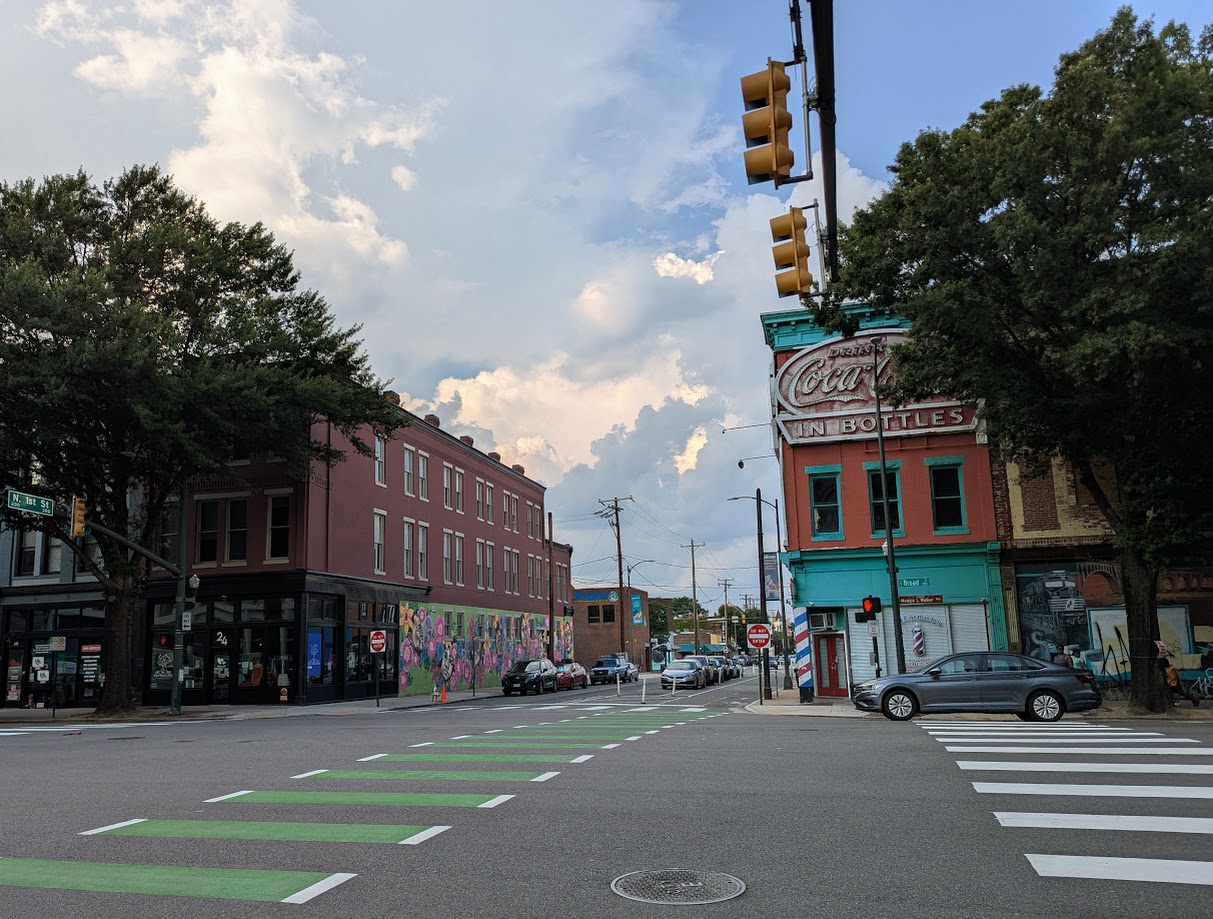
The story gets worse. The night before the fire, the army emptied barrels of liquor into the streets to prevent the Union army from getting hold of the booze. Given Union soldiers’ violent, drunken marauding through the Carolinas, that might have made sense if not for the impending flames and the powder-keg rage and panic of the crowd. At the center of the city—perhaps right here where M. and I walked to Mama J.’s for catfish and collards—men gulped whiskey from the gutters while a howling, hungry mob seized barrels of bacon, molasses, and tea from the city’s storehouses.
The next day, soldiers set fire to the warehouses and a bridge. As the flames spread, “children, old and infirm persons, and many persons under the influence of the liquor” burned to death.
Imagine being called “cowardly” for trying to prevent such suffering. Imagine being ruled by an ideologically extreme regime that places no value on your life even while it claims to fight for you.
Just days after the sacking and burning of the city, the Richmond Whig concludes:
The ways of Providence are inscrutable. This firing of our goodly city would seem at first glance an unmitigated evil. But there is another view to be taken of it. It has had one certain good effect. If there lingered in the hearts of any of our people one spark of affection for the Davis dynasty, this ruthless, useless, wanton handing over to the flames their fair city, their homes and altars has extinguished it forever.
The Union army got the fires under control on April 3. Abraham Lincoln visited Richmond on April 4 with his 12-year-old son Tad, whose birthday it happened to be. While some Richmonders no doubt wished Lincoln dead—which he would be in 10 days’ time—a jubilant crowd of freed African Americans and poor white people surged around him and tried to shake his hand. When asked at Davis’s abandoned White House how the army should treat residents of the former Confederacy, Lincoln said, “If I were in your place, I’d let ’em up easy.”
It’s night, and the only light is your city burning around you. The enemy has done terrible things elsewhere—people have done terrible things to each other—but the war is over, and the first thing they will do here is put out the fire.
Does the worst have to happen? Am I kidding myself to believe compassion and forgiveness are more transformative than pain and ruin? Here in 2025, I’m afraid we’re fixing to set the country on fire for spite again. I wish we could feel the pain of our ancestors so we wouldn’t have to repeat it.
A Supplicant in Pajamas
By the second and last night of the trip, my shoulder hurt so much that I couldn’t sleep. No position brought relief, and I’d forgotten to buy ibuprofen. Around midnight, with M. sleeping soundly in the other bed, I eased into a loose t-shirt over pajama pants and shuffled down the hall to the front desk, cradling my arm like a broken wing.
The same guy was at the desk as the night before. Sympathetic, he searched the hotel’s first aid supplies for pain reliever, but no luck. Then he said, “Wait a second.” He went into a back room and returned with his personal stash of Advil, offering me the whole bottle. I thanked him and asked him just to pour three pills into my hand. Those three Advil let me sleep, and that small moment of human connection eased my anxious heart.
As an aside, the real horror of Kafka’s Metamorphosis is not that Gregor turns into a bug but that his family treats him as an embarrassing burden without any compassion for his plight. The absence of basic sympathy, of the wish to relieve someone’s pain, is more monstrous than a giant cockroach. In times that are starting to feel like a Kafka story, I treasure every kindness.
The next morning, M. had to drive us home because I couldn’t lift my arm to hold the steering wheel.
Rhymes with Brain
Back home, I messaged my brother Rick, who has decades of experience doing massage therapy on people with sports and repetitive motion injuries. I was afraid I’d dislocated my shoulder. He called right away.
Rick: How bad is the pain?
Me: I’m whimpering and cursing.
Rick: OK, then it’s probably not dislocated. When people have a dislocated shoulder, they usually scream nonstop.
Oh, good. What kind of crappy planet is this, anyway?
A set of x-rays at the ER provided a likely diagnosis but no effective treatment: the opioids just made me dizzy, and the topical NSAID gel—excellent for many other things—didn’t help much, either. Ibuprofen started giving me weird abdominal pains, so that was out. Was it time to drink whiskey from the gutter?
In the middle of the night, after a false move had triggered an excruciating spasm, I started to feel as if I were falling apart. Entropy was an evil clown waving at me with a red rotator cuff.
Then I remembered the Curable app. Curable focuses on ways to reduce pain through education, imagery, guided meditation, and other techniques. I downloaded it one-armed, paid the fee, and went through the first lesson. Simply hearing someone explain how we can rethink pain, directly impacting our nervous system, made me feel better, and the meditation helped me sleep.
Here’s a shocking truth: there is little correlation between structural damage and pain. Scans of people with and without pain revealed that pain-free people often have the same types of structural problems—bone spurs, herniated disks, torn rotator cuffs—as the people with pain. At the same time, there are people with severe, chronic pain who show no visible signs of damage.
All pain is real. But because our thoughts and feelings speak to our cells, we have the chance to tell those cells a different story. Can we try it on the body politic, too?