Sheltering the Soul of the World
Reflections on Rosh Hashanah and a Holocaust Memoir

As I start this post, it’s the first day of Rosh Hashanah, the beginning of the Jewish High Holy Days. I know that not because I’m religiously observant (I’m not), but because my friend Charlene wished me shana tova, “good year,” and then I ran to check the dates. Fall has crept up on me, and so have the Days of Awe.
Rosh Hashanah is not just the Jewish New Year; it is a celebration of the birthday of the universe. According to the mystical Kabbalists, the eve of Rosh Hashanah is the start of a vast cosmic drama. On that night all things revert to a primal, sleep-like state. The spark of divine will withdraws, and God watches from a great distance as the clockwork gears of the universe grind and the world continues to turn. Hold on for your life!
As noted earlier, powerful stories have high stakes. According to the Talmud, “As the soul fills the body, so God fills the world." Last night as I ate dinner and watched Star Trek: Lower Decks, the divine spirit silently withdrew from creation. Because I was on the couch instead of at temple, I didn’t feel a thing. Should I have?
Here is the “high stakes” part of the story: the spark of Spirit doesn’t have to come back. It could leave us spinning darkly in the void, clinging like rational ants to the third rock from the sun. God has to want to come back. Traditionally, the shofar horn calls out to God, stirring the divine will to return to the created universe instead of tossing it aside like a kid’s outgrown toy. The blowing of the shofar saves creation for another year by repledging the people to their God. It “rouses the soul of creation to a renewed commitment to the endeavor of life.”
It’s worth noting that the shofar is the most primitive, unmusical instrument ever. Its sound makes me think of Dudley Moore blowing a raspberry in the 1967 comedy Bedazzled to awaken from his wish-turned-nightmare. Moore just wants to be loved by the woman he loves, and Peter Cook’s devil follows each wish to the letter while making sure to ruin it. In this one, Moore is a pop star surrounded by adoring women until he gets upstaged by the devil’s hypnotic indifference. “You fill me with inertia” has to be the best pop-song line ever.
It’s both funny and poignant that an ancient people imagined a raspberry blown through a ram’s horn could sway the will of God. For them, the stakes were always high. A tiny community eking out an existence in a harsh landscape, they needed to know they were loved and watched over. They needed meaning and purpose as well as food and shelter. What did they have to work with but adherence to moral law and a cry of faith through the amplifier they had on hand?
I know this: God is not a cruel, capricious king who demands an annual pffffbbbpppfff of loyalty from the riffraff. That story reflects the scared people who rocked themselves to sleep with it. But like all stories that endure, it has a living, shining core of truth. As Annie Dillard observed, prayer and ritual work on us, not on God. Our vision of a soulful world animates us year after year. We are the ones who have to choose life, over and over, in good times as well as bad.
During the Holocaust, Europe’s Jews must have felt as if God had fled and the devil had taken over to amuse himself with their suffering. Prayer after prayer went unanswered as the Nazis assembled the machinery of death, fueled it with lies and hate, and set it in motion. Where was God as the inertia of evil kept Eichmann’s trains running on time?
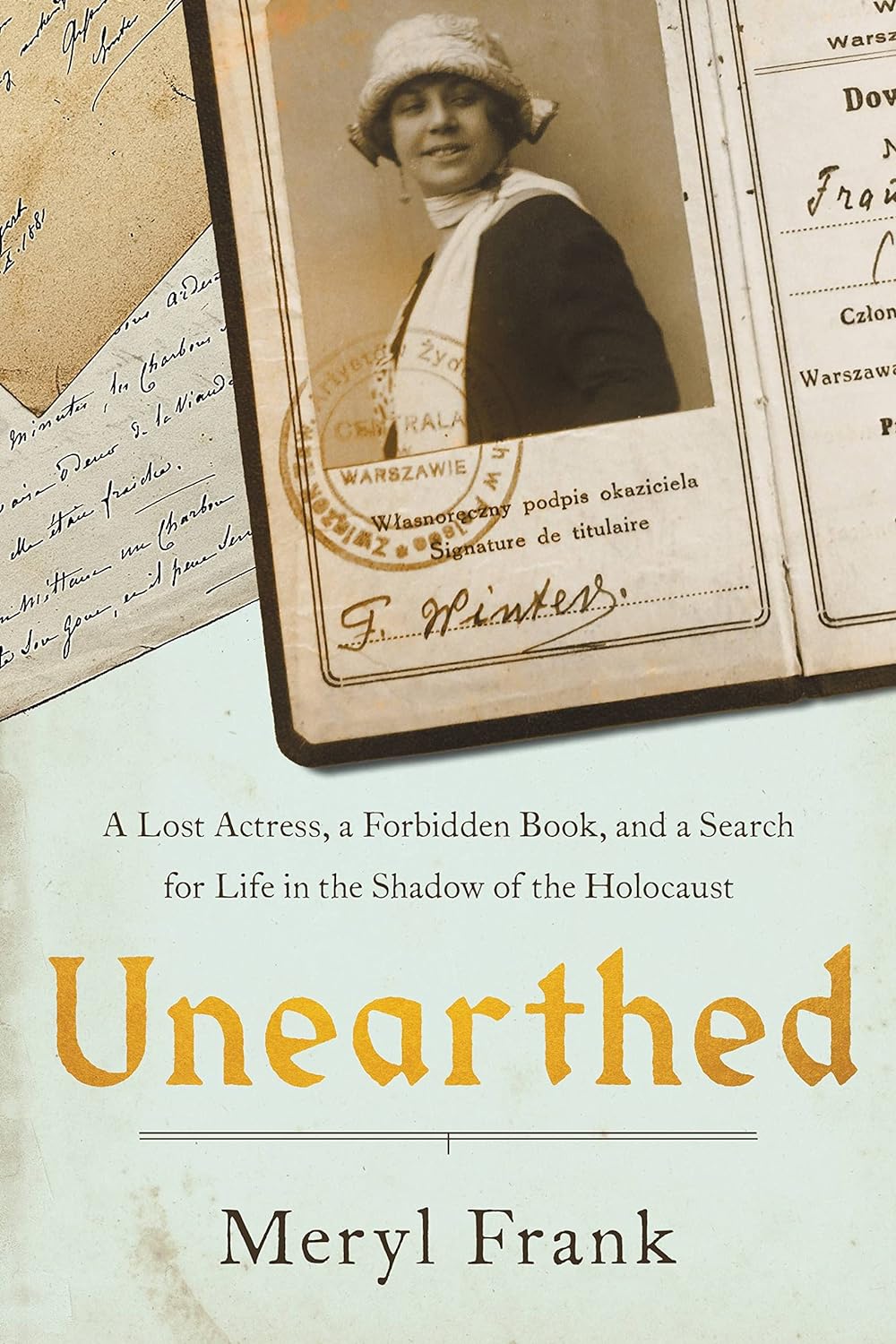
This Rosh Hashanah, I’m thinking of a book that embodies these questions and one woman’s thoughtful answers. Charlene’s sister Meryl wrote a compelling memoir about her family that deeply affected me and my sister Tracy. As far as I know, we’re not related to these other Frank sisters, though our maternal ancestors came from the same “Litvak” community as the relatives whose lives Meryl unearths. Whether or not we’re bound by blood, I feel the kinship.
Between 1941 and 1945, the Nazis systematically killed 95 percent of the Lithuanian Jewish population. Charlene and Meryl’s Aunt Mollie had beseeched her relatives to leave before it was too late. But who could believe what was about to happen? For a community so full of life and culture, genocide was unthinkable. Unable to save them, Mollie preserved their memory and told their stories to the next generation.
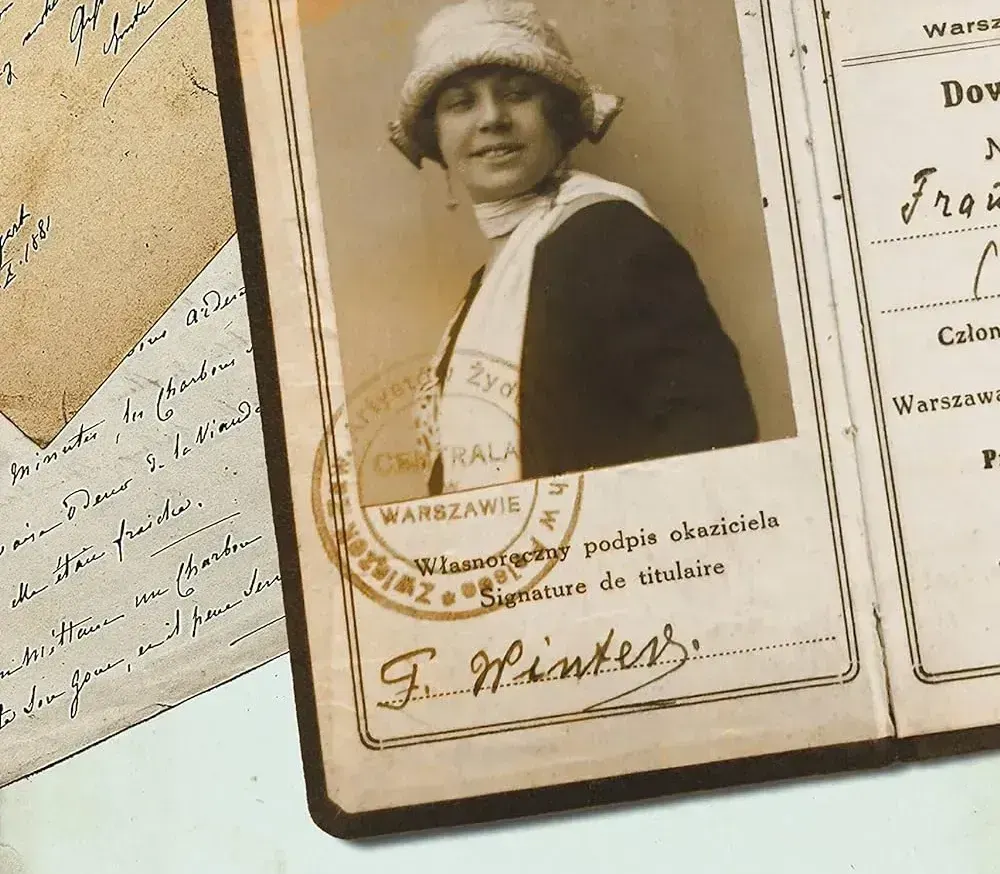
Mollie called on Meryl to be the next yahrzeit, or memorial candle, of their family’s lost ones. She also gave her a mysterious book in Yiddish, ordering her to keep it safe but never read it. Mollie was a 5-foot-tall “bulldog” (Charlene’s word) who negotiated implacably on behalf of the New York teacher’s union1; to her nieces, her word was law. With that unopened book on a shelf, Meryl undertook a journey of many years, deep research, and several trips abroad to unearth the fates of those who hadn’t made it out of Europe. In particular, she focused on Franya, an actress in Yiddish theater whose photos and stories had fascinated her since childhood.
Meryl Frank’s book is many things: compelling memoir, detective story, and breathtaking trail of coincidences, including family photos found by a stranger in the attic of an abandoned building. It is moral reflection in the shadow of the Holocaust—the kind that has occupied me since childhood and must occupy every descendant of survivors. Most of all, though, it is a call to choose life. For those of us living in comfort and freedom, that means preserving and sharing the lessons of history; staying awake to what’s happening around us; sounding the alarm when our society seems bedazzled by lies; and opening the door when persecuted people knock.
A free society shelters its soul by choice, tending the flame day after day and year after year. Sometimes this spirit withdraws and we have to call it back collectively, with whatever instruments we have on hand.
According to Charlene, her Aunt Mollie would save up for a year for the most beautiful, elegant dress she could find. She knew the men across the negotiation table from her would feel uncomfortable yelling at a tiny, well-dressed woman. She always won. ↩