The Rhetoric of Hope
Thoughts after watching a portrayal of John and Abigail Adams and the Continental Congress.

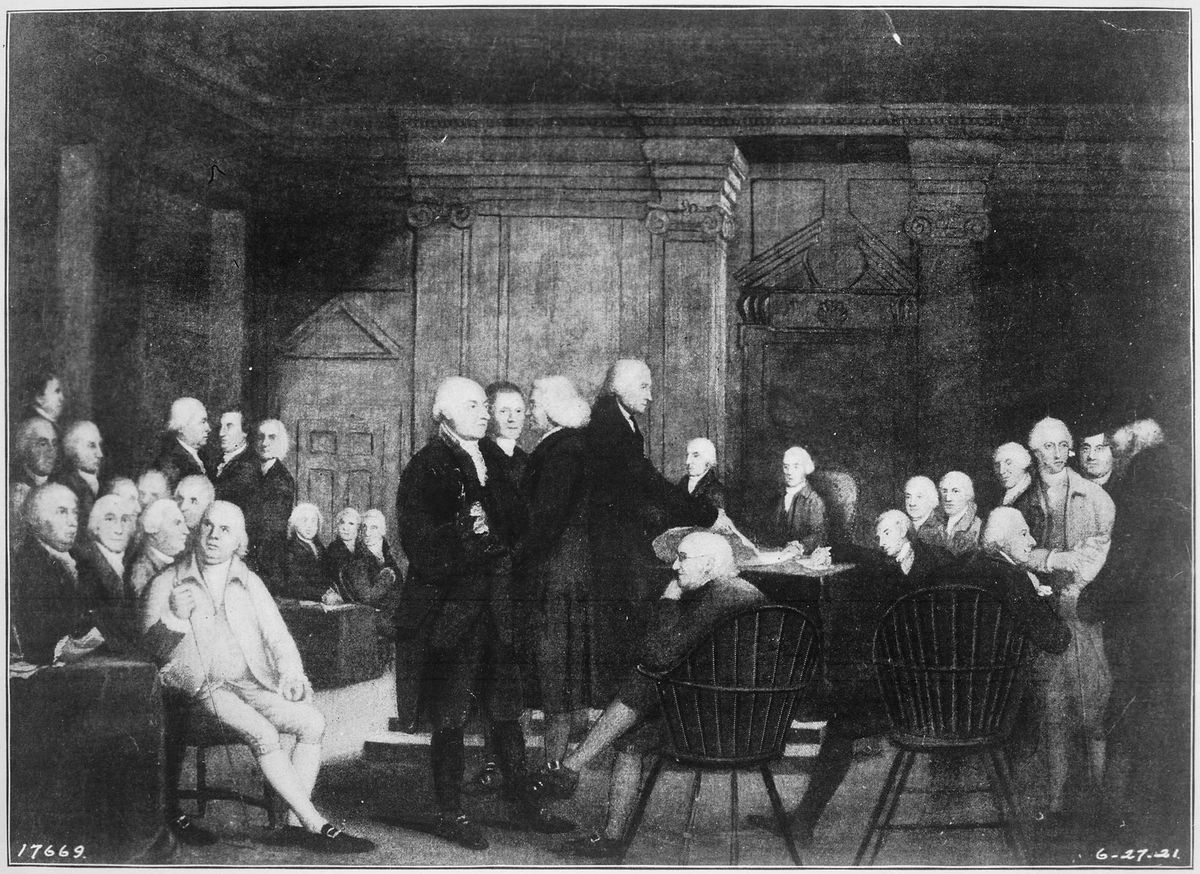
Last night I watched the first two episodes of HBO’s 2008 series John Adams. Despite the odd casting for Adams—nearly every other main character was more interesting to watch—I was enthralled enough to stay up past my bedtime. It wasn’t the bloody skirmishes between farmboys and redcoats that kept me transfixed; it was murmurs in a bedroom and shouting in a stuffy meeting hall.
The series portrays the long, fractious sessions of the Continential Congress in which representatives of the 13 colonies argued the case for and against independence—in wigs in the sweltering summer heat. As sweat streamed down exasperated men’s faces, it became clear that the case for independence hinged on the ability to build unity. Even knowing what happened, I found myself thinking, “Holy ____, how are they going to pull this off?”
Adams’ impassioned speeches eventually tipped the balance. He succeeded in building consensus despite his antagonism of Pennsylvania’s John Dickinson, who argued equally passionately for reconciliation and appeasement. Dickinson wrote the Olive Branch Petition, a last-ditch effort to avoid war with Great Britain. Adams accused him of religiously based moral cowardice.
As Benjamin Franklin reproaches Adams later, “It’s perfectly acceptable to insult a man in private. He may even thank you for it afterwards. But when you do it in public, they tend to think you are serious."
Adams’ nearly fatal flaw as an orator was his combative, arrogant bluntness. He was right, everyone else was wrong, and he would bark erudite quotes at them until they admitted their error, by God. Behind the scenes, his wife Abigail worked brilliantly to temper this self-defeating tendency. In bedroom whispers and hundreds of exchanged letters, his “dearest friend” would read his drafted rants and then gently but firmly put her finger on the flaw. Sometimes she would reproach with a single word: “ambition” or “vanity.” He would grumble, mutter, and then stomp off to revise.
In fact, Abigail’s advice was so important to the new nation that George Washington personally ensured the safe delivery of her letters to her husband. Unfortunately, the Founding Fathers failed to heed her wisdom when she wrote:
I long to hear that you have declared an independency. And, by the way, in the new code of laws which I suppose it will be necessary for you to make, I desire you would remember the ladies and be more generous and favorable to them than your ancestors. Do not put such unlimited power into the hands of the husbands. Remember, all men would be tyrants if they could. If particular care and attention is not paid to the ladies, we are determined to foment a rebellion, and will not hold ourselves bound by any laws in which we have no voice or representation.
As she implies, Abigail wasn’t the only woman determined to have a say. At the Constitutional Convention, a Maryland delegate named James McHenry wrote in his notes:
A lady [possibly the witty Elizabeth Willing Powel], asked Dr. Franklin Well Doctor what have we got a republic or a monarchy. A republic replied the Doctor if you can keep it.
Strangely, the historical record would change “a lady” to “someone.” It would be another 150 years before the hard-won passage of the 19th Amendment would grant women the right to step out from behind the scenes.
Another hundred or so years later, here we are. I’m a 4th-generation American woman pecking out these words on a Sunday morning to a soundtrack of Sounds of Silence. After last week’s two bombshell Supreme Court decisions by a majority of arrogant, dishonest men—ambition! vanity!—and one Handmaid of the Biblical Lord, I take nothing for granted anymore: not anyone’s basic freedoms, not my safety from a mass shooting in the produce aisle, and not the keeping of our Democratic Republic.
John Adams is a welcome reminder that 250 years ago, the voice of hope and courage won out against the voice of fear and capitulation.
Happy Sunday, Everyone.