The Sailmaker's Daughter
170 years ago, a teenage girl wrote about the contrast between fine weather and cruel times.

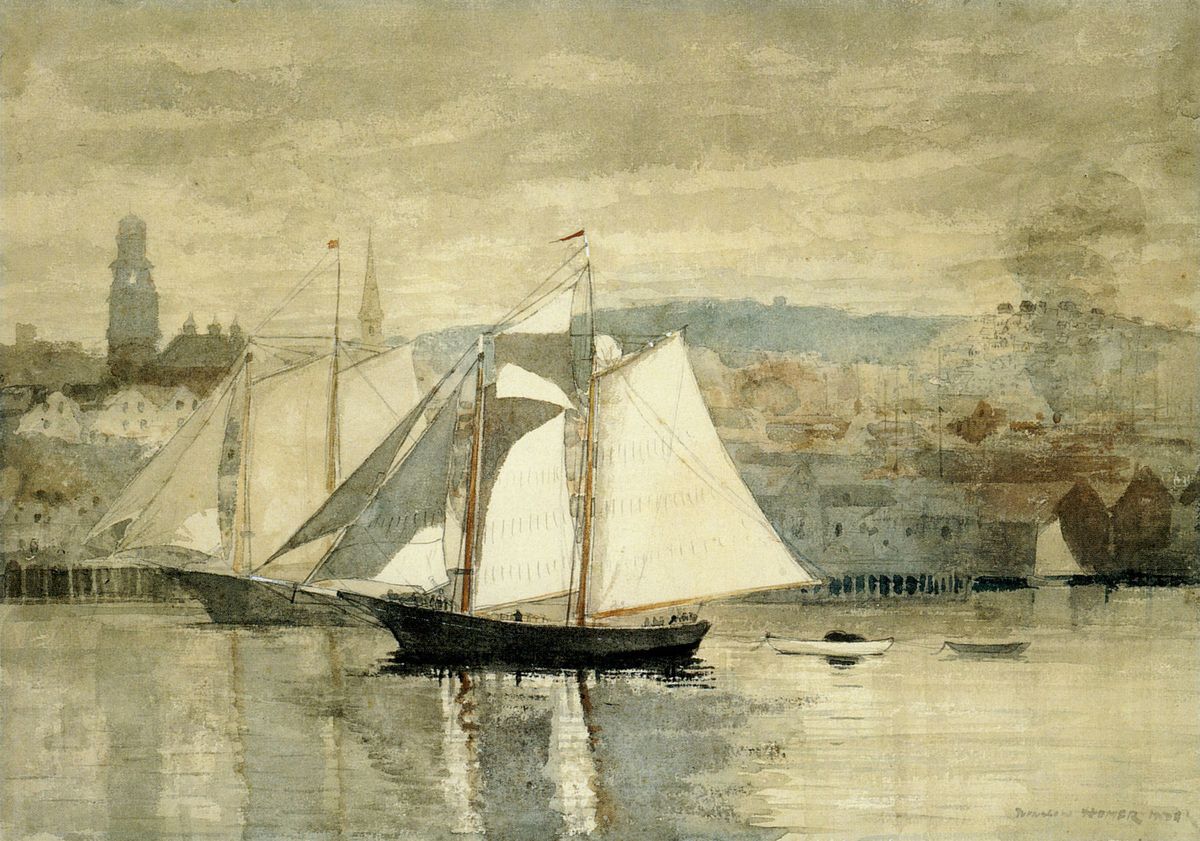
In the excellent movie The Holdovers, Paul Giamatti’s curmudgeonly history professor says, “History is not simply a study of the past; it is an explanation of the present.” Today, I’m looking to the past not for explanations so much as… company. How did good people feel and act in tumultuous times? How did they get their minds and hearts around it all without feeling paralyzed by empathetic distress? Big, sweeping movements of history or culture are for someone else to examine and elucidate. I’m interested in individual people—how they stayed afloat and kept sailing forward.
In particular, I’m thinking about a young woman who struggled with the contrast between fine spring days and human-made suffering:
A beautiful day. The sky is cloudless, the sun shines warm and bright, and a delicious breeze fans my cheeks as I sit by the window writing. How strange it is that in a world so beautiful, there can be so much wickedness… —The diary of Charlotte Forten, 1854
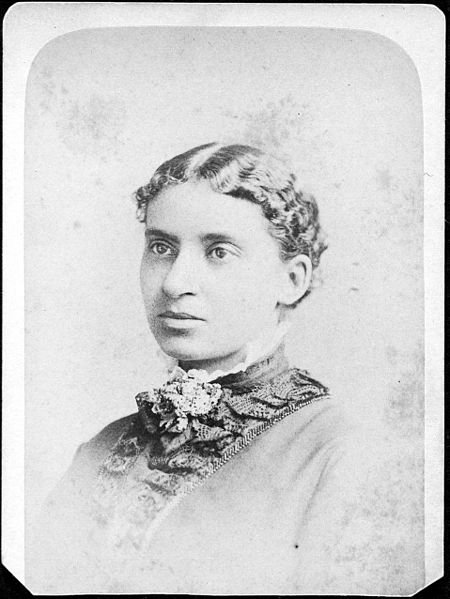
Charlotte Forten was an African American girl born free in Philadelphia in 1837. Her mother died when she was three years old; her father was an affluent sailmaker who also designed a nine-foot telescope. Because Philadelphia’s schools would not admit black students, her father sent her to attend high school in Salem, Massachusetts, where she lived with friends of their family. In 1854 at age sixteen, she decided to keep a diary.
A wish to record the passing events of my life, which, even if quite unimportant to others, naturally possess great interest to myself, and of which it will be pleasant to have some remembrance, has induced me to commence this journal.
Charlotte’s words suggest she was both thoughtful and cheerful by nature. She had a strong work ethic with a bit of playful mischief thrown in.
Wednesday, May 24, 1854—
Rose at five. The sun was shining brightly through my window, and I felt vexed with myself that he should have risen before me; I shall not let him have that advantage again very soon. How bright and beautiful are these May mornings! The air is so pure and balmy, the trees are in full blossom, and the little birds sing sweetly. I stand by the window listening to their music, but suddenly remember that I have an Arithmetic lesson which employes me until breakfast; then to school, recited my lessons and commenced my journal. After dinner practised a music lesson, did some sewing, and then took a pleasant walk by the water. I stood for some time admiring the waves as they rose and fell, sparkling in the sun, and could not help envying a party of boys who were enjoying themselves in a sailing boat. On my way home, I stopped at Mrs. Putman’s and commenced reading “Hard Times,” a new story by Dickens ... I anticipate to much pleasure in reading this story.—Saw some agreeable friends ... prepared tea, and spent the evening in writing.
I love this image of her climbing a cherry tree in newfangled bloomers:
Saturday, July 15, 1854—
Have been very busy to-day.—On my return from school did some sewing, and made some gingerbread.—Afterwards adopted “Bloomer” costume and ascended the highest cherry tree, which being the first feat of the kind ever performed by me, I deem worthy of note.—Obtained some fine fruit, and felt for the first time “monarch of all I surveyed,” and then descended from my elevated position...
Despite these light moments, Charlotte’s life was hardly smooth sailing. The sun greeted her each day in an almost unimaginable America: one in which her freedom would have vanished had she crossed the Mason-Dixon line, and in which people with her skin color were only marginally safe to the north of it. When Charlotte was a baby, a white mob in Philadelphia burned down an orphanage for black children. (Burned. down. an orphanage. I can’t get my mind around it.)
Even when northerners were inclined to offer safety to those escaping slavery, the Fugitive Slave Act of 1850 enforced complicity with the pursuers. Teenage Charlotte expressed her anguish and outrage over the fate of Anthony Burns, who escaped to Massachusetts but was arrested there and then returned to slavery.
Friday, June 2, 1854—
Our worst fears are realized; the decision was against poor Burns, and he has been sent back to a bondage worse, a thousand times worse than death. Even an attempt at rescue was utterly impossible; the prisoner was completely surrounded by soldiers with bayonets fixed, a canon loaded, ready to be fired at the slightest sign. To-day Massachusetts has again been disgraced; again has she showed her submissions to the Slave Power; and Oh! with what deep sorrow do we think of what will doubtless be the fate of that poor man, when he is again consigned to the horrors of slavery…A cloud seems hanging over me, over all our persecuted race, which nothing can dispel.
And then the sun came out again anyway, and Charlotte went on living, as she had to, into her own future. She would stay informed and engaged; eventually, she would become a teacher and prominent abolitionist. She would write a two-part essay for The Atlantic about teaching formerly enslaved people on the Sea Islands off the coast of South Carolina. She would marry Frank Grimké, write poetry, and work for women’s suffrage until her death in 1914.
Empathy for other people’s suffering can paralyze us, or it can propel us into action. Charlotte was one tiny boat navigating the storms of her time: slavery, oppression, and war. She both closely identified with victims of injustice—of necessity and from the heart—and used her unique position and abilities to uplift others. On our own rough seas of 2024, with compassion and determination, may we fare forward at least half as well as the sailmaker’s daughter.