The Weight of Civilization
Driving south with a carful of books.

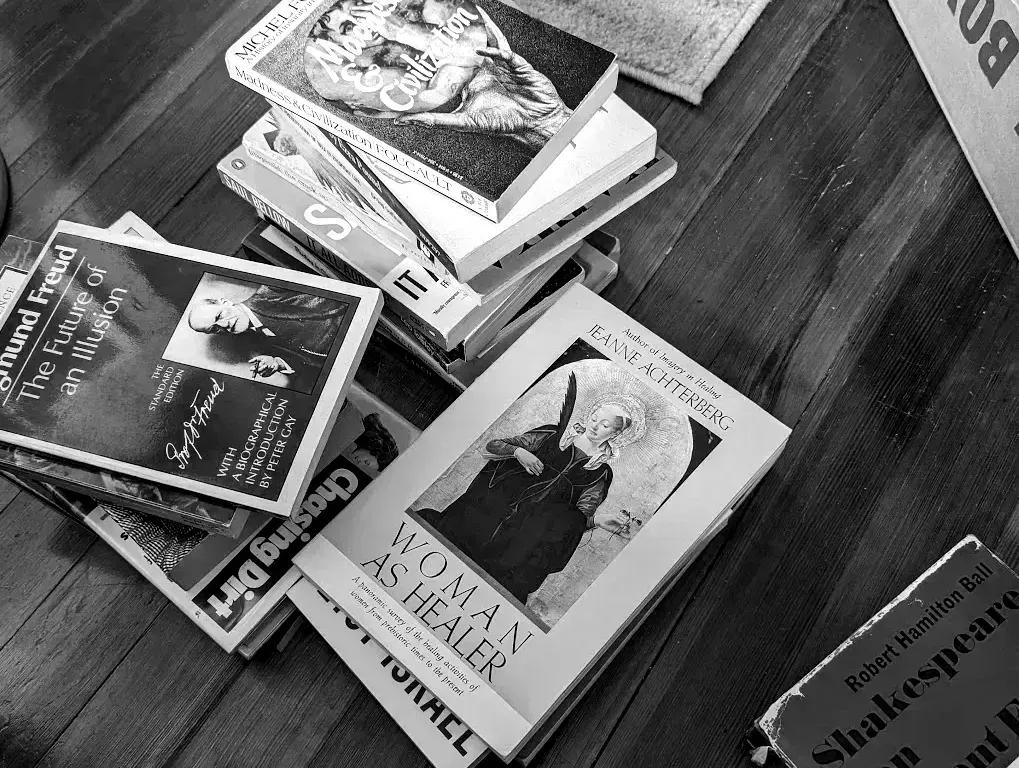
For a decade I’ve lived with the weight of western civilization and its decline on my head, by which I mean I’ve been storing boxes of books in my attic for a friend. It’s been no trouble; I like being knee-deep in books, and his beautiful set of Modern Library classics furtively found their way down into my office bookshelf years ago. Inside the cover of The Bostonians, I found this hilarious “J’Accuse!” bookplate:
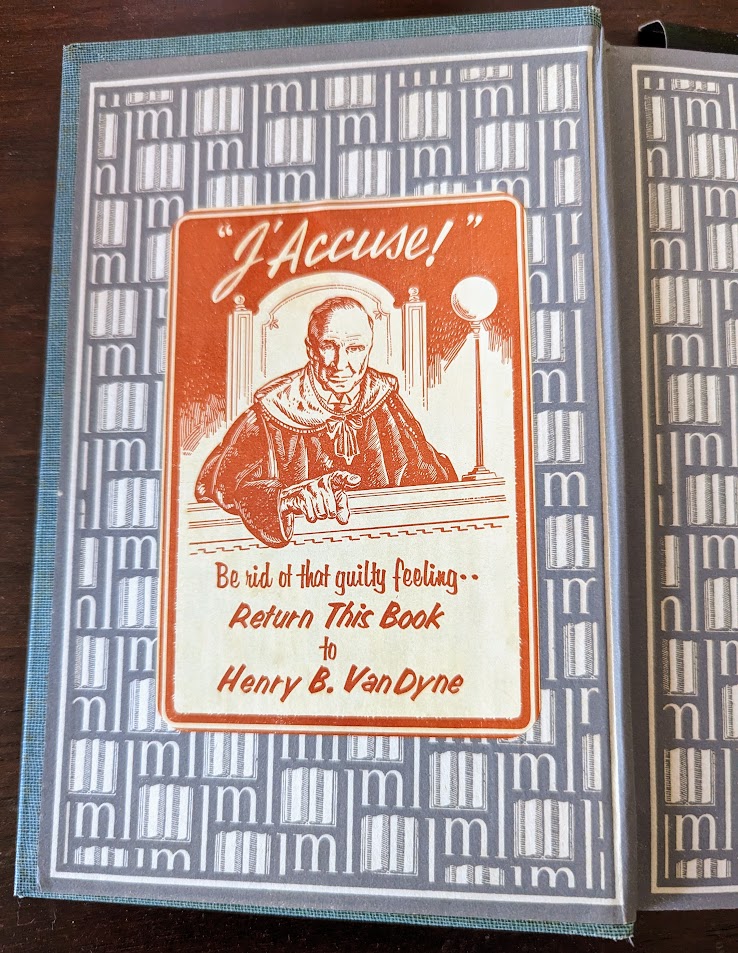
I have no idea who Henry B. VanDyne is, or was. Alas, with a date of 1956 on the copyright page, I suspect there is no longer a Henry VanDyne on earth to reclaim his Henry James. Unlike the ebooks on my phone, these books are real objects with their own histories. People have held them and turned their pages, and the oils from their hands remain long after they’re gone.
Now and then I’ve climbed the attic stairs and peered into neatly labeled boxes of classic literature, political and moral philosophy, cultural history, and aesthetic commentary. I’ve thought, “Oh yes, I loved that one” or “I ought to read that” or “What’s up with that?” In the last category is a glossy full-color art book titled, no kidding, Bottoms. True to its word, it’s full of artistic renderings of rear ends through the ages, like an art historian’s Playboy. Well.
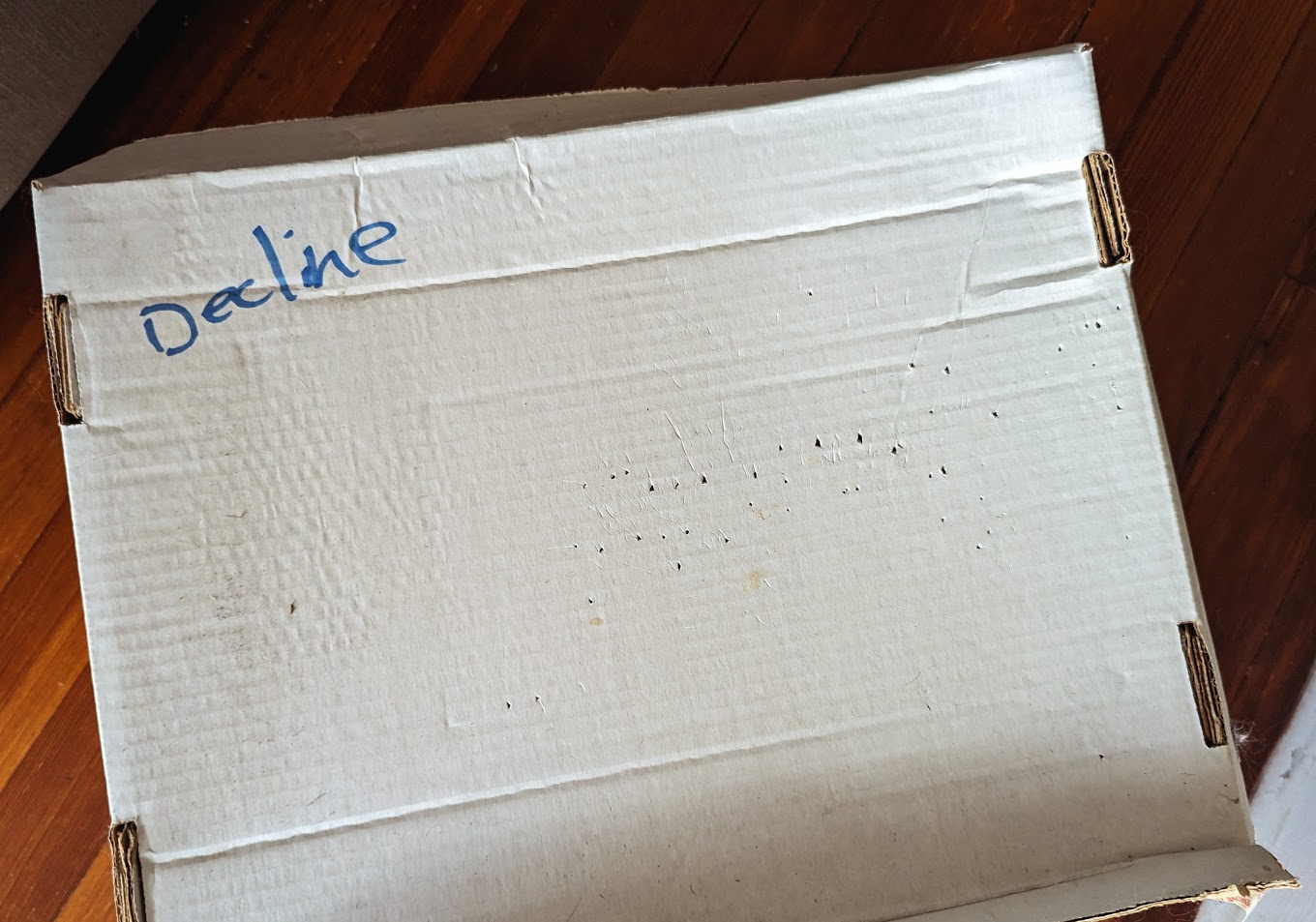
I’ve entered that upstairs guest room and skirted past the banker’s box labeled Decline with a vague sense of guilt: shouldn’t I be digging in to get a better grasp of where it all went wrong, this civilization thing? The cats have no such compunction: they’ve used the lid for a scratching pad.
It’s been good to host these books, but now it’s time to return them to their owner. As I lift them from their boxes and vacuum out dust bunnies, silken strands of cat hair, and a few tiny spiders, I realize the books, like the history of a long friendship, have affected me even when they weren’t consciously on my mind. Even when I haven’t been perusing or skirting them, I’ve been living, working, and sleeping under them. I’ve felt them resting up there in their attic lair like a canopy of culture, and critique of culture.
But maybe it’s the room itself that’s weighted with meaning and feeling. At the start of the COVID pandemic, I spent nights up there with my dying cat Sophie, who didn’t want to come down. Unable to sleep, I read parts of Proust’s Remembrance of Things Past under a skylight full of stars. The bed’s old headboard has a built-in bookshelf, and she would hunch on top of it or curl up inside it behind my head. Some of my friend’s books were in there, too, including an account titled Don't Sleep, There Are Snakes: Life and Language in the Amazonian Jungle. I always meant to read that one.
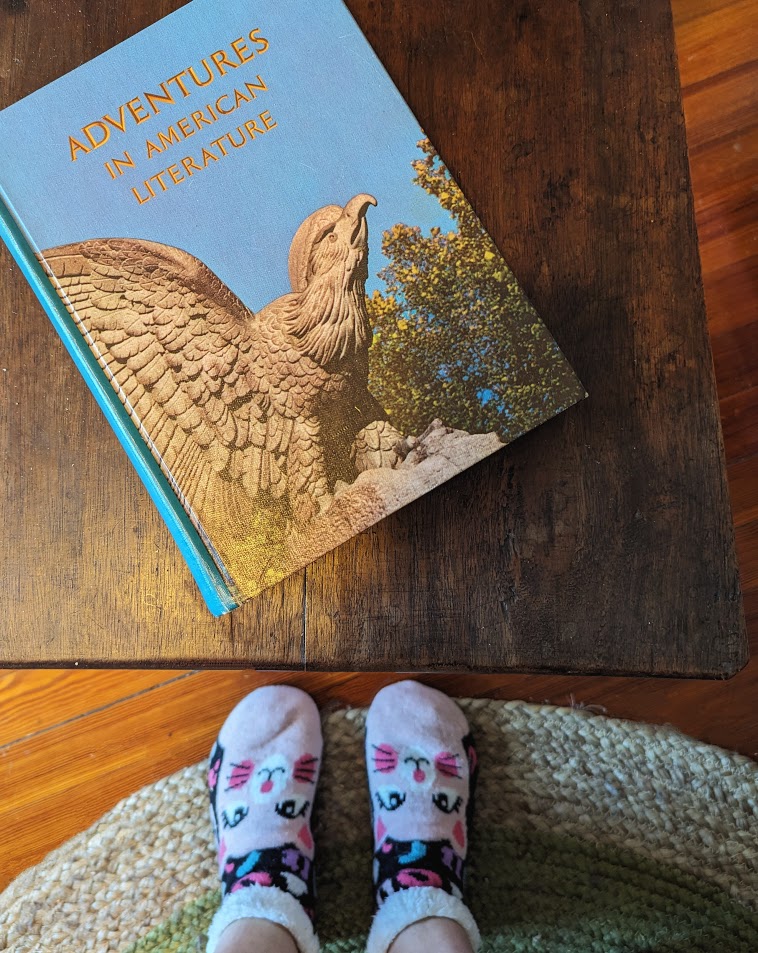
Some of my own books are tucked away in the attic, too, like my collection of high-school English Language Arts textbooks. Talk about heavy: I’m amazed kids ever manage to lug those deadweights around all day. On the other hand, they carry around heavier things now in their bulletproof backpacks.
After dusting and airing the books, I load them into my car. The next day I plan to meet my friend in the parking lot of McKay Books in Winston-Salem, an incomparable used bookstore. He’s visiting his parents in NC for a few weeks, so this is an ideal time to sell some of the books and release them into other hands. Of course, I’ll also have the pleasure of seeing an old friend after many years.
By the time I’ve lugged all the boxes and bins down two flights of stairs and wrestled them into the car, my back and legs are sore, but in a satisfying way: I like being strong enough to accomplish this task on my own. My butt may not be artistic, but it’s incredibly functional.
I finish loading the car just as it starts to rain. Dog tired, I fall asleep that night with a feeling of lightness tinged with wistfulness…and sneezing. Early in the morning, I get on the road on what promises to be a fine day.
I’ve coasted down Highway 220 so many times, I can anticipate every curve and landmark. There’s the cluttered, gaudy display of lawn decor and the towering sign for “TRUMP STORE - Second Light.” Because it’s a long way between traffic lights on this rural highway, another gigantic sign will loom above the road in a mile or so. I always think of stopping to take a pic but then change my mind: this seedy stretch is not where a single woman wants to pull over in her smiley-face EV to point and click. I’ve traveled many pleasant country roads in the South, asking directions of friendly folks when the cell signal cut out and thinking If my car broke down, that farmer would help me, but this road has a different vibe: scruffy and vaguely threatening. This is Franklin County, Moonshine Capital of the World. Many folks here no doubt would lend a stranger a hand, but others have steady IVs of bootleg liquor, populist rants, and unfiltered rage in their bloodstreams. They also have lots and lots guns.
Anyway, like Robert Frost I have promises to keep and miles to go before I sleep. I don’t want to be driving this road home in the dark.
I used to zip blithely along 220 in my Honda Civic, passing the slowpokes; now I’m puttering along in the right lane with fingers crossed. The Leaf is bearing an unusually heavy load up these battery-draining hills, and I’m nervous about its range. For distraction, I blare my classic pop playlist. Paul Simon’s singing “Me and Julio Down by the Schoolyard,” and I sing along with off-key exuberance.
And I'm on my way
I don't know where I'm going
I'm on my way
I'm taking my time but I don't know where
Oh, hang it—this is fun! It will be all right.
In her essay “Aces and Eights,” Annie Dillard talks about opening up a summer cottage and writes with deft downplay of the important bit, “we do not come into the world with a box of groceries and a duffelbag full of books—unless you want to take these as metonymic symbols for culture.”
Yes, thank you, I do. My book-laden car is a metonymic symbol of culture. I lug around its borrowed treasures with only the vaguest clue what they mean; at the same time, I ride inside the thing itself. With a map snatched from thin air, I brazenly grab the wheel. I’m singing at the top of my lungs as I coast along this sketchy road, Lord willin’ and the charge don’t fail.