Hope on a Plate: the Power of Comfort Foods
I had craved the warming spices of the chai, but someone smiling at me with genuine warmth was the comfort I truly needed. In a world that often feels numbingly cold, comfort food and human community are both essential sources of warmth, and they are best served together.

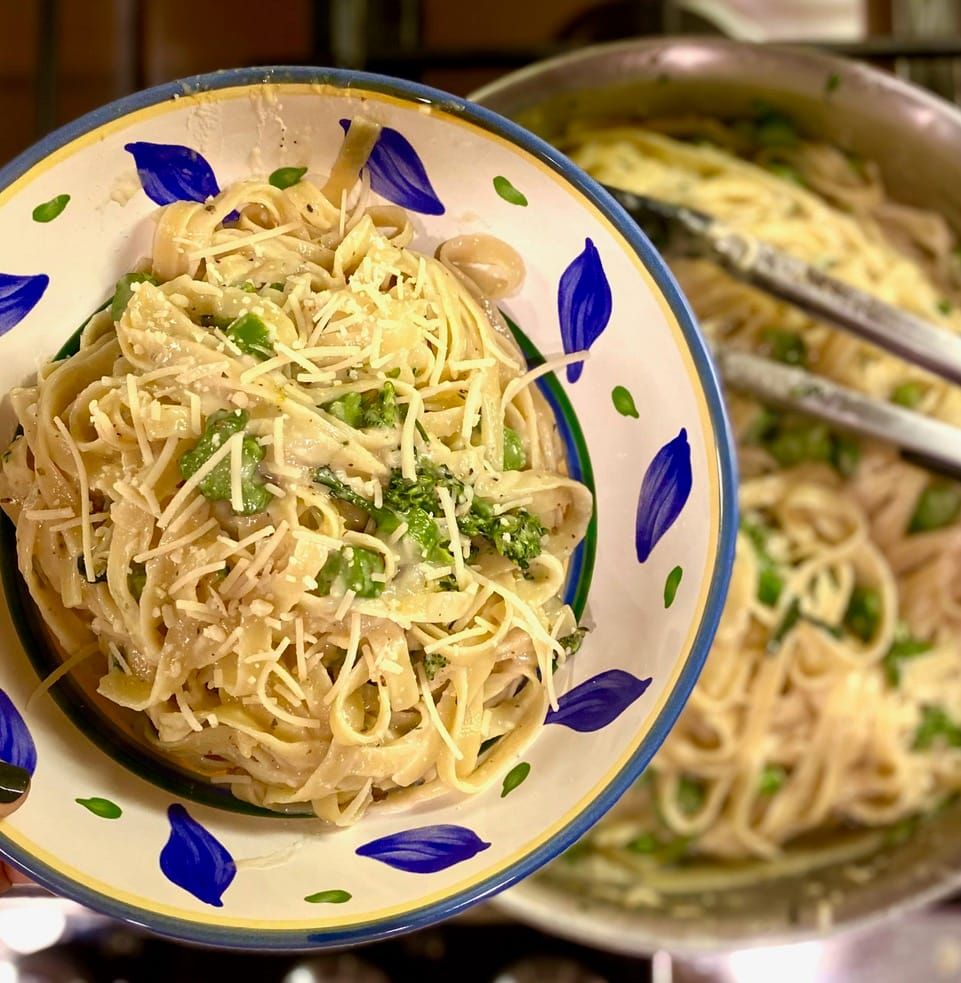
Note from Jody: when Kristen Hartke and I were running around downtown Annapolis unsupervised in the 7th grade, I never would've imagined that she would someday build a beautiful career around food. For one thing, she was the thin one. For another, we lived in the moment, immersed in teen dramas and crushes — Peter Frampton! — and untroubled by the future. Kristen's post reminds me that while we couldn't know who we'd become, our younger selves are still with us, shaping our very cells. We still remember the taste and feel of comfort. (Also, I'm pretty sure that Frampton concert damaged my hearing.)
There's an Italian grocery store across the street from my New York apartment building, and just inside the entrance is a small counter with pastries, coffee, and other hot beverages. As I was walking by on my way home today, feeling world-weary, I suddenly remembered that they make a nice almond milk chai and decided to duck inside to treat myself.
It turned out to be the best decision of the day. The older woman at the cash register relayed my order to a young man being trained on how to use the gleaming espresso machine, gently encouraging him as he steamed the milk and stirred in a concentrate of spiced tea. When she handed me the cup, she smiled broadly, saying in her lilting Caribbean accent, “Here you go, lovie. It’s nice to see you again.”
I had craved the warming spices of the chai, but someone smiling at me with genuine warmth was the comfort I truly needed. It's nice to see you again. In a world that often feels numbingly cold, comfort food and human community are both essential sources of warmth, and they are best served together.
As a professional food writer and recipe tester, I've explored traditional comfort foods around the world. The most comforting dishes tend to be centered on rice, pasta, potatoes, and bread, often just lightly seasoned: congee, beans on toast, chilaquiles, khichdi, chicken noodle soup, mac and cheese, pierogi, scrambled eggs, mashed potatoes, dumpling-studded stews. But those comfort foods are more than just nourishment to the people who crave them — they come with a personal story, with a memory of being cared for, loved, cherished.
Years ago, when I was pregnant with my daughter, I had debilitating morning sickness — really, it was "all day" sickness — that lasted for most of my first trimester. The smell of food was practically unbearable, and I couldn’t go anywhere near my kitchen. Still I had to find something to eat that I could stomach. Hummus and pita bread seemed like it might be palatable, so my dad suggested that my husband could pack up a small cooler each day and place it in our sitting room, far away from the kitchen.
When I think back, my memories are less about the snacks that I was able to eat during those lonely days — hummus, pita bread, Goldfish crackers, apple sauce — and more about that act of love from my husband, packing up that cooler each day for two months. It gave me comfort during a time that was supposed to be joyous but felt incredibly dark.
As the days went by, I was able to nibble a little more until I finally got to the second trimester and the nausea went away — replaced, ironically, by a craving for jalapeños.
I recently shared another memory of comfort food on Substack: a little hamburger that my grandmother used to make me when I was sick. Honestly, there’s nothing special about that hamburger, and my grandmother was no Ina Garten. When I made one for myself a few weeks ago (a vegetarian version), it was less about the burger and so much more about the memory of sitting in my grandmother’s kitchen. The burger represented the hope that things would get better.
 The Kitchen Confessional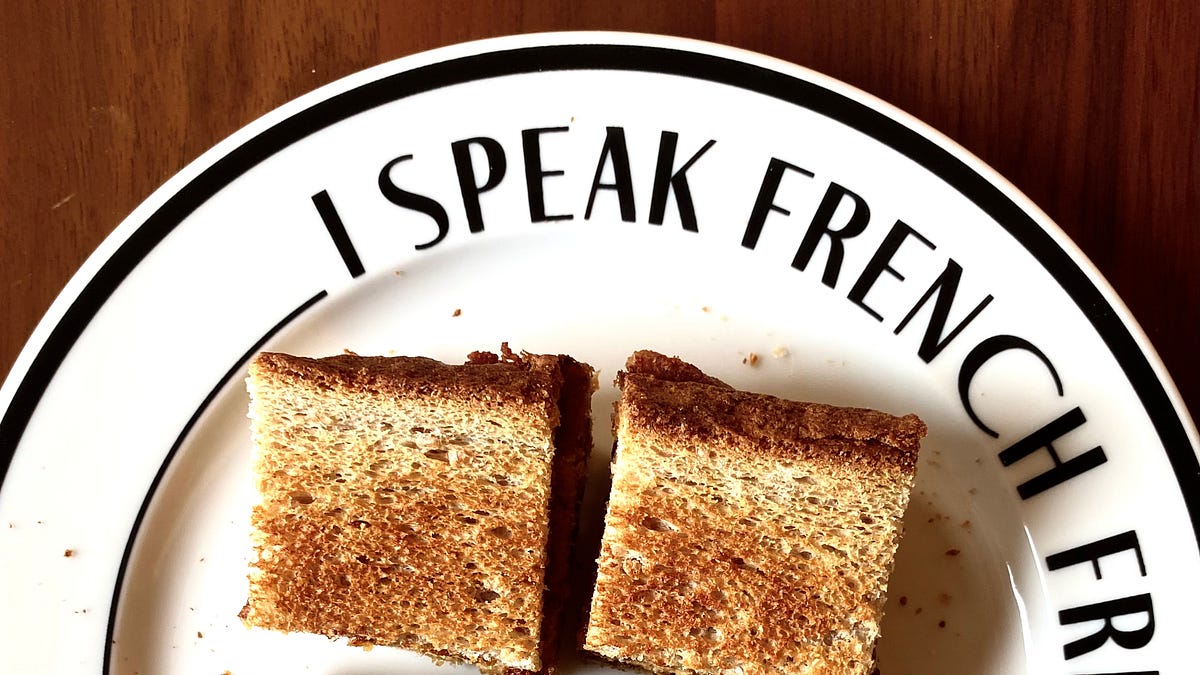
When I make a gingery congee to combat a bad cold, it’s a reminder of my favorite restaurant in Chinatown, where I’m always welcomed with a hug and a steaming pot of tea. Hummus and pita bread will forever make me think of the tiny baby that once grew inside my belly and how her dad did everything in his power to bring me hope when I felt hopeless.
In a world where so much feels out of our control, the food on our plates can give us hope. Comforting dishes remind us that kindness and generosity exist in abundance, in small ways and large, both in the past and in our present. Those meals keep alive the memories of people and places long gone but forever held dear. So tonight, cook up a pot of hope — and let it nourish your soul.
Angel Hair Pasta with Currants and Pine Nuts
This simple pasta dish is one of my go-to comfort foods. I used to make it for myself when my husband Rick was working late in the newsroom, and we recently enjoyed it together.
Serves 2
- 8 ounces dried angel hair pasta
- 1/2 teaspoon fine sea salt
- 1/2 cup dried currants
- 3 tablespoons extra virgin olive oil
- 1/2 cup pine nuts, lightly toasted
- 1/2 teaspoon garlic powder
- 1/2 teaspoon ground black pepper
- 1 tablespoon finely chopped fresh parsley
- 2 teaspoons dried chili flakes
- 1 teaspoon flaked sea salt
- 1/4 cup grated Parmesan cheese (dairy or non-dairy), plus more to garnish
Bring two quarts of water to a boil in a medium (3 to 4 quart) stockpot or Dutch oven and add the fine sea salt. Cook the angel hair pasta according to package directions, usually about 4 minutes, and add the dried currants during the last minute of cooking. When the pasta is al dente, reserve 1/2 cup of the pasta water, then drain completely. Pour the pasta and currants back into the same pot, then add all the remaining ingredients and toss thoroughly to incorporate, adding the reserved pasta water, a tablespoon at a time, as needed to create a glossy coating. You may not need all the water.
Divide between two bowls and serve immediately, garnishing with additional Parmesan cheese, if desired.